
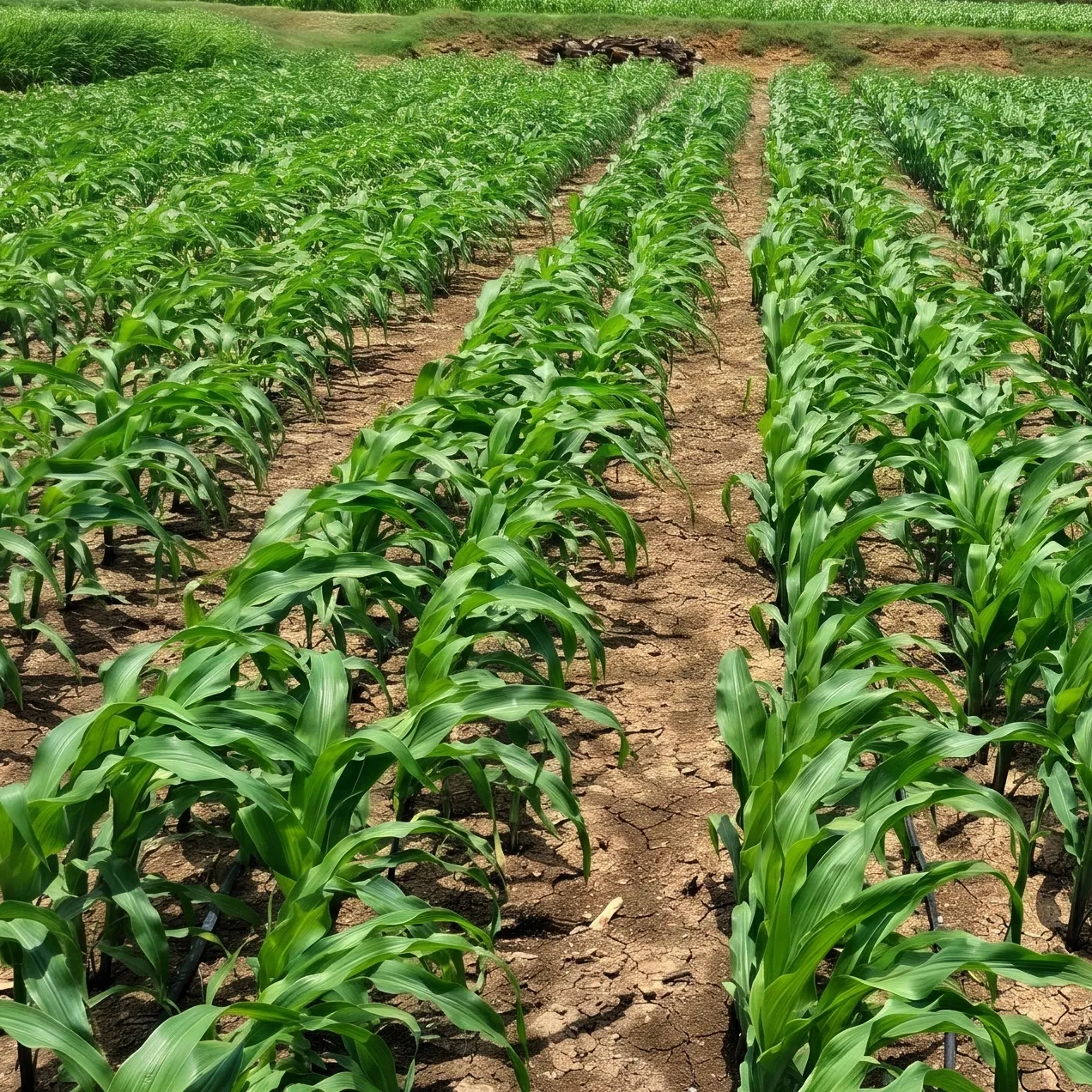
Weed Management in Maize: Choose the Right Herbicide at the Right Time
Early weed management is essential for healthy maize growth and higher grain yield. Weeds compete with maize for resources during the early stages of crop growth. Effective management combines timely pre-emergence herbicide application, manual weeding, and selective post-emergence herbicides based on the types of weeds present in the field. Correct herbicide selection, application timing, and dosage are essential to achieve effective weed control while protecting the maize crop.
Maize is highly sensitive to weed competition during its early growth stages. Weeds compete with young maize plants for essential nutrients, water, sunlight, and growing space, affecting crop establishment, plant vigour, root development, cob formation, and grain filling. Heavy weed infestation can significantly reduce yield and increase cultivation costs. The first four to six weeks after sowing are particularly critical for weed management. Therefore, maintaining a weed-free field during this period is essential for healthy crop growth and higher yields.
Not all herbicides control all types of weeds. Selecting a herbicide without identifying the dominant weeds may result in poor control, unnecessary expenditure, and possible crop injury.
The major weed groups in maize include broad-leaved weeds, grassy weeds, and sedges. Inspect the field before deciding on a weed-control method. A field dominated by grasses requires a different approach from one heavily infested with broad-leaved weeds or sedges. We will discuss ways to control weeds effectively in maize below.
1. Manual Weeding: An Important and Reliable Practice
Manual weeding or inter-row hoeing around 15–20 days after sowing is a highly recommended weed-management practice in maize. It can provide several benefits:
• Effectively removes weeds.
• Loosens the surface soil and may improve soil aeration and water infiltration.
• Helps break surface crusting caused by rain.
• Reduces dependence on repeated herbicide applications.
A second weeding may be required around 30–35 days after sowing (DAS) if another flush of weeds emerges. Hoeing should be shallow and performed carefully to avoid damaging maize roots.
If manual weeding is not feasible, a suitable pre-emergence and/or post-emergence herbicide may be considered.
2. Pre-Emergence Weed Management
Pre-emergence herbicides are applied after sowing but before weeds emerge. They help suppress the germination and early establishment of susceptible weeds, reducing competition during the initial growth of maize.
2.1 Pendimethalin or Metolachlor
These herbicides are useful against susceptible germinating grassy weeds and many broad-leaved weeds. Hard-to-control weeds such as Cyperus rotundus may not be controlled by pre-emergence herbicides.
2.2 Atrazine for Pre-Emergence Weed Control
Atrazine is a commonly recommended herbicide for weed management in maize. It has both pre-emergence and post-emergence activity, particularly against many broad-leaved weeds. However, atrazine may not be effective in controlling grassy weeds and sedges. Since atrazine is used in tank mixes with other post-emergence herbicides, applying pendimethalin or metolachlor as a pre-emergence treatment may be a better option, as these herbicides control a wider range of weeds.
Best practices for pre-emergence herbicides:
• Apply within the timing specified on the product label and in local agricultural recommendations (usually within three days of sowing and the first irrigation).
• Apply before weed seeds have germinated in the field.
• Ensure that the soil has adequate moisture for the herbicide to work effectively.
3. Post-Emergence Weed Management
Best practices for post-emergence herbicides:
• Early application, when weeds are at the 2–4-leaf stage, generally improves the chances of effective control.
• The soil should have adequate moisture.
• Heavy rain shortly after spraying may reduce weed control.
• Follow the recommended dosage and tank-mixing instructions carefully to avoid over- or under-dosing.
3.1 Tembotrione + Atrazine
Tembotrione is a selective, systemic, post-emergence herbicide primarily used to control a wide spectrum of annual broad-leaved and grassy weeds in maize.
Tembotrione, an activator, and atrazine should be mixed properly according to the label recommendations for effective weed control.
At the recommended dosage and with proper spraying practices, tembotrione is safe for maize plants.
3.2 Mesotrione + Atrazine
This is available as a ready-mix formulation, eliminating the need to mix the individual chemicals as required with tembotrione.
Excessive doses, unsuitable mixtures, or application under stressful conditions may cause temporary leaf bleaching or scorching.
Avoid spraying when the maize crop is under water stress.
The chances of minor leaf bleaching or scorching due to improper handling are higher with mesotrione-based chemicals than with tembotrione.
3.3 Tolpyralate + Atrazine for Itch Grass
This combination may be considered for fields with a heavy infestation of itch grass (Rottboellia cochinchinensis). Good control can be achieved only when it is sprayed at the 2–4-leaf stage of itch grass. It may not be effective against mature itch grass plants.
3.4 Halosulfuron-Methyl for Purple Nutsedge and Other Sedges
Purple nutsedge (Cyperus rotundus) and rice flatsedge (Cyperus iria) can be difficult to manage because of their growth habits and ability to regrow.
Halosulfuron-methyl is a better option for controlling sedges where its use is registered and specifically recommended for maize.
Follow the recommended application practices. It may take 10–15 days for the nutsedge plants to dry completely, but the control is expected to be very good compared with that achieved using other herbicides.
This is a weed-specific option. It should not be expected to control all grassy and broad-leaved weeds in the field.
4. Should 2,4-D Be Added for Heavy Weed Infestation?
2,4-D formulations may have a role in controlling certain hard-to-control broad-leaved weeds in maize when used according to appropriate recommendations. However, do not automatically add 2,4-D to a tembotrione–atrazine or other herbicide mixture.
In cases of severe broad-leaved weed infestation, 2,4-D may be mixed with tembotrione at a lower dosage, but only when the crop is more than 20 days old.