
Anabe (Foot Rot / Collar Rot) — Arecanut
Ganoderma lucidum
Symptoms
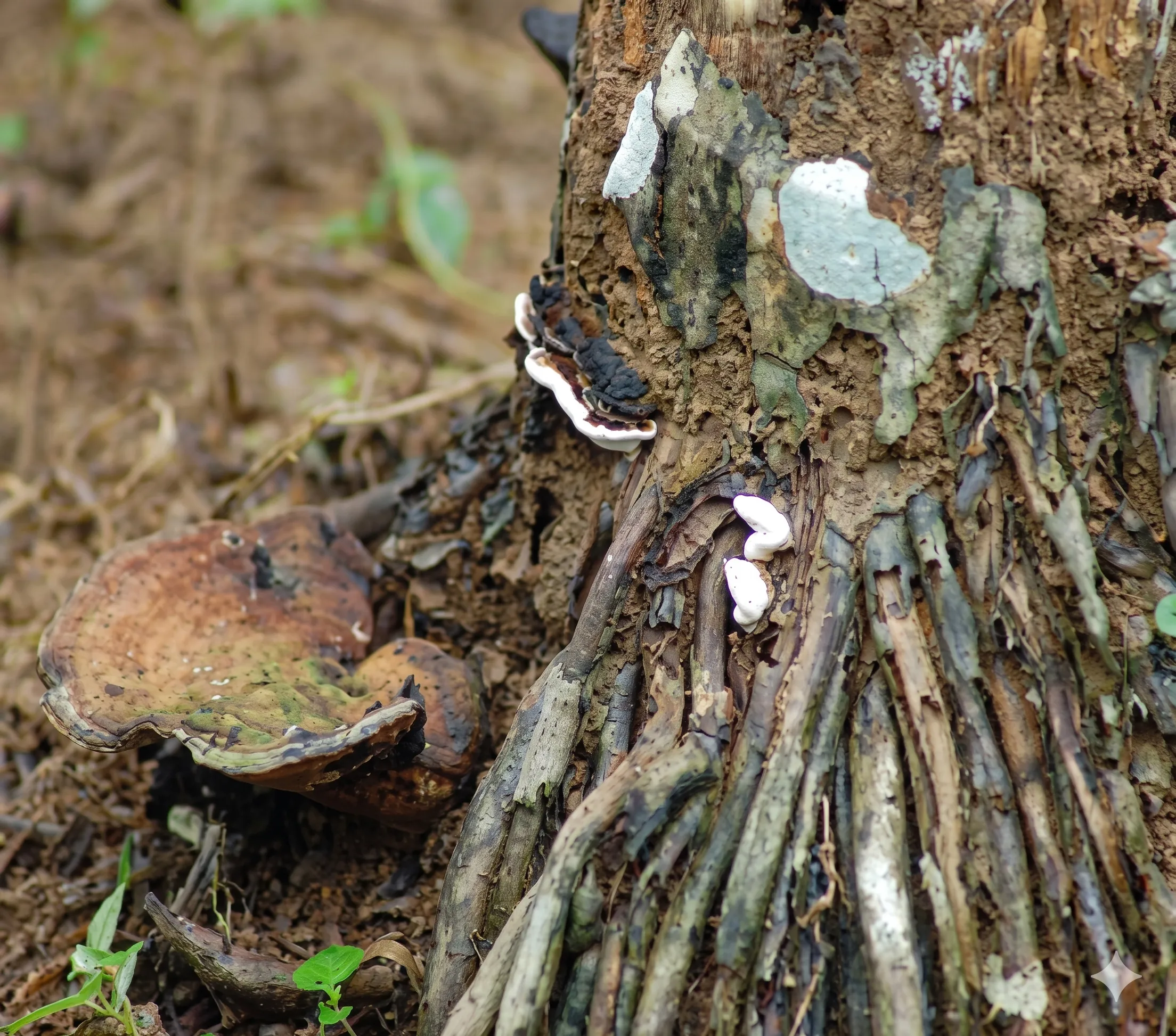
The initial visible symptom is yellowing of the leaves in the outer whorl. Yellowing gradually spreads from the outer whorl towards the inner whorls. The leaves exhibit wilting and progressively droop downward. Leaves are shed one by one as the disease advances. The development of inflorescences and nuts is arrested. Nuts that have already formed are shed. In advanced stages, only a tuft of one or two leaves, together with the central spindle, may remain at the crown. The weakened crown may eventually topple, leaving the trunk bare. A dull, brownish patch develops initially at the base of the trunk. The brownish patch gradually enlarges. Brownish, gummy liquid exudes from the affected basal stem region. The stem lesion may extend approximately 0.5–1 metre above ground level. When the affected stem is cut open, the internal tissues show brownish discolouration extending up to approximately one metre above ground level. The discolouration extends through the trunk to the roots. Infected roots become discoloured, brittle and dry. A musty smell may be noticeable in the infected roots. Bracket-shaped fungal fruiting bodies may develop at the base of the trunk in advanced stages or after the death of the palm. The fungal brackets may also appear on the stump after the affected palm has been felled.
Recommendations
No recommendations available