
Koleroga / Fruit Rot / mahali — Arecanut
Phytophthora arecae
Symptoms
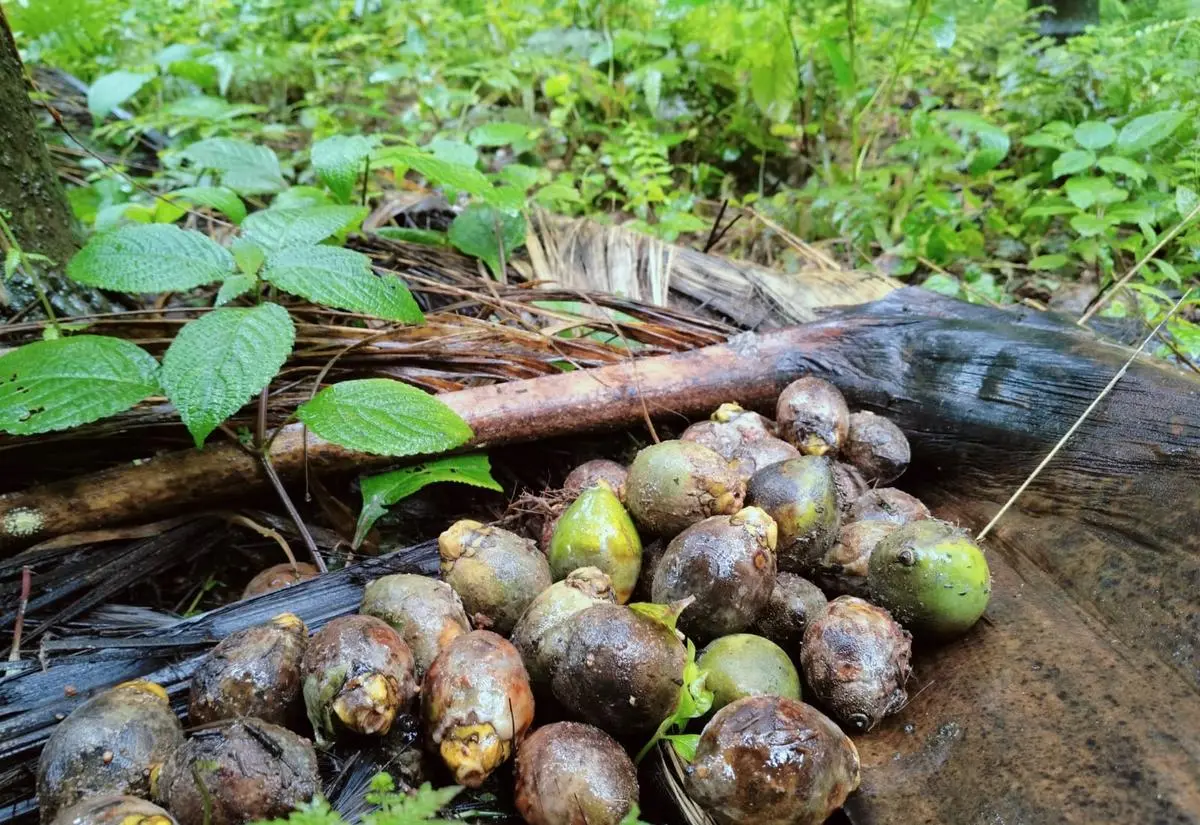
The first visible symptom is the appearance of water-soaked lesions on the nut surface near the calyx or perianth end. The infected portion gradually becomes dark green, contrasting with the lighter green colour of the healthy portion. The natural lustre of the infected nuts is lost. The lesions progressively enlarge and spread over the nut surface. In advanced stages, the lesions cover the entire fruit surface, resulting in extensive rotting. Infected nuts are shed prematurely, usually without the calyx. A whitish, felt-like fungal growth develops over the lesions of fallen nuts. The white fungal growth may eventually envelop the entire surface of a fallen nut. Nuts at all stages of maturity can be affected. In severe infections, the fruit stalks and the axis of the inflorescence may also become affected. The kernel may become discoloured. Diseased nuts are lighter in weight and may contain large vacuoles. The quality of infected nuts deteriorates, making them unsuitable for chewing.
Recommendations
When disease incidence is at early stage.
In taller plantations where manual spraying is difficult, root feeding can be adopted. However, as root feeding takes time to show results, it should be carried out during the early stages of disease infection or as a preventive measure during rainy seasons.