
Inflorescence die back — Arecanut
Colletotrichum gloeosporioides
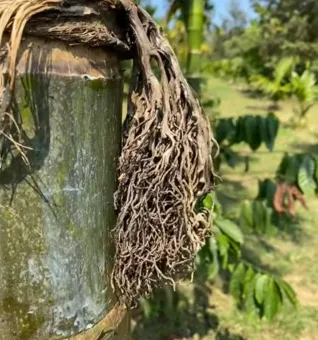
Symptoms
Yellowing of the inflorescence rachis begins at its tip. The yellowing progresses downwards towards the base of the rachis. The affected rachis gradually dries. Female flowers or young developing nuts (buttons) are shed. Button shedding may occur following the yellowing and drying of the rachis. The symptoms can occur throughout the year but are reported to be more severe during the summer months, particularly February–May. Note: this condition may be associated with several factors, including inadequate pollination, insufficient nutrients, water stress, high temperature and other physiological causes. Therefore, the symptoms do not necessarily establish a fungal cause in every affected inflorescence and need to be carefully assessed.
Recommendations
No recommendations available