
Yellow leaf disease — Arecanut
Phytoplasma
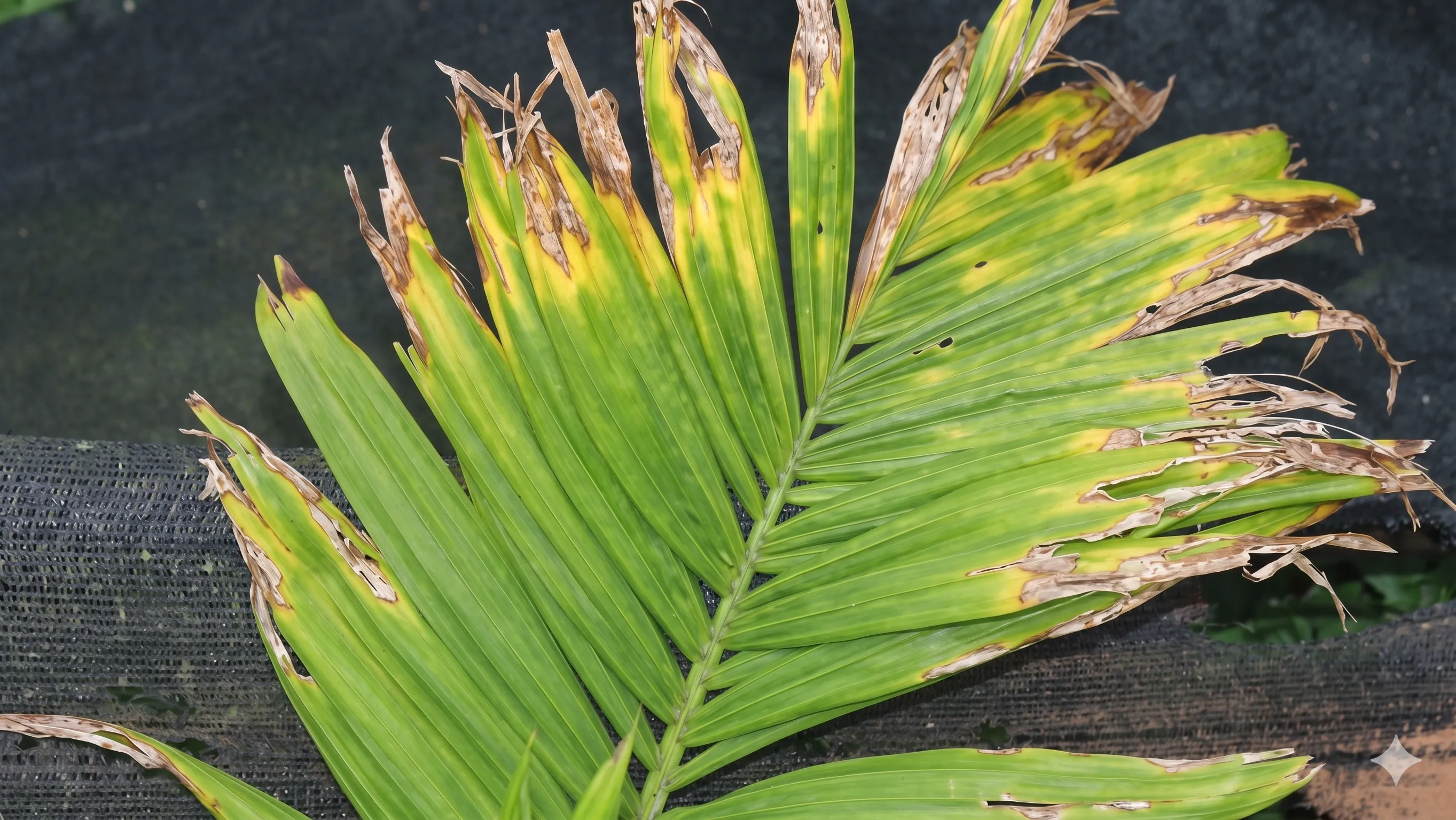
Symptoms
A. Leaf symptoms Yellowing begins at the tips of the leaflets, particularly on leaves in the outer whorl. The yellowing gradually extends along the margins of the leaflets. Green stripes may remain between the yellow areas, producing a characteristic yellow-and-green pattern. The transition between green and yellow regions may be relatively abrupt. Necrosis (death of tissue) frequently develops at the leaflet tips. Yellowing may progress along the leaflets, with increasing areas of chlorotic tissue. In advanced stages, the leaves become smaller than normal. The leaflets become stiff and pointed. Some affected leaves may exhibit a reduced or abnormal appearance as the disease advances. Leaf symptoms are generally more pronounced during the post-monsoon or wet-season period and may become less conspicuous during summer. B. Crown symptoms The overall size of the crown gradually decreases. The length of the internodes may be reduced. The palm becomes stunted. The number of leaves in the crown may decline as the disease advances. In severe cases, the crown becomes markedly reduced, reflecting the progressive decline of the palm. C. Root symptoms Developing feeder roots show varying degrees of blackening. The blackened roots gradually decay. Root deterioration becomes more pronounced as the disease advances. The lateral roots may be affected substantially, with root tips showing blackening and decay. D. Nut and kernel symptoms The number of nuts produced per palm declines. Nut size may become smaller than normal. Some nuts are shed before reaching maturity. Kernels from diseased palms may become soft. The kernel may show blackish discolouration. The kernel may develop a spongy structure. The disease is associated with a reduction in nut production and deterioration of kernel quality. Note Symptoms may become clearly discernible during September–November. Yellowing can be pronounced after the monsoon and that visible symptoms may become less apparent during the dry season. Reduced visibility of symptoms during summer may not necessarily indicate recovery from the disease.
Recommendations
No recommendations available