Damping off

Damping off

Causal organism

Pythium spp., Phytophthora spp., Fusarium spp., Rhizoctonia solani and other fungi

Symptoms

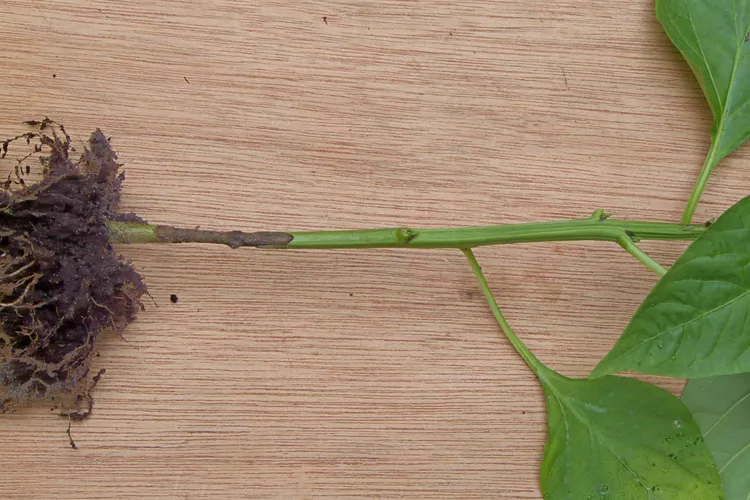
🫘 Pre-emergence phase •Seedlings die before emerging above the soil surface. •The young radicle and plumule are killed. •Complete rotting of the seedlings occurs. 🌱 Post-emergence phase •Infection develops in the young collar tissues at ground level. •Infected tissues become soft and water-soaked. •Seedlings topple over or collapse.

Recommendations

No recommendations available

Early blight

Early blight

Causal organism

Alternaria solani

Symptoms

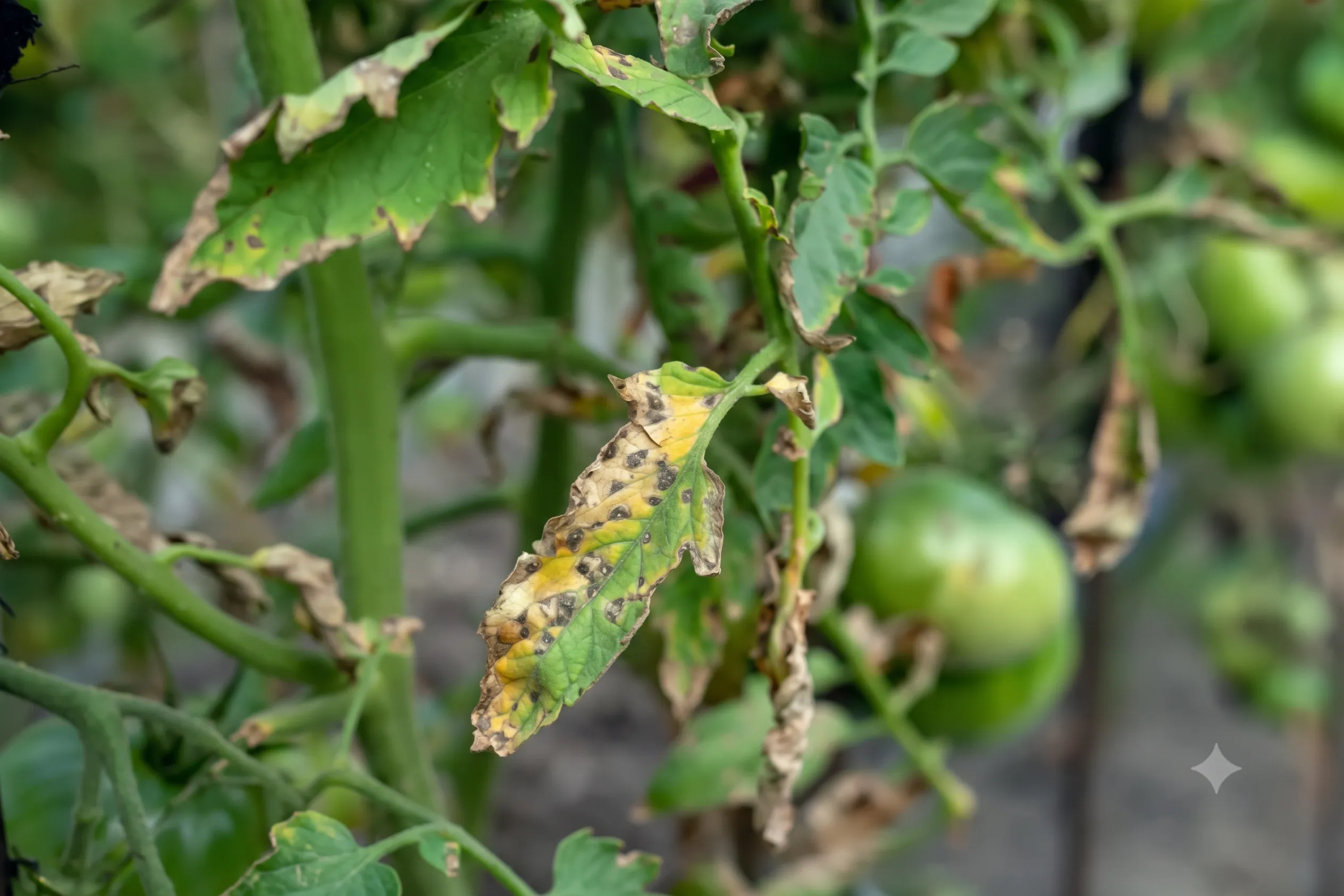
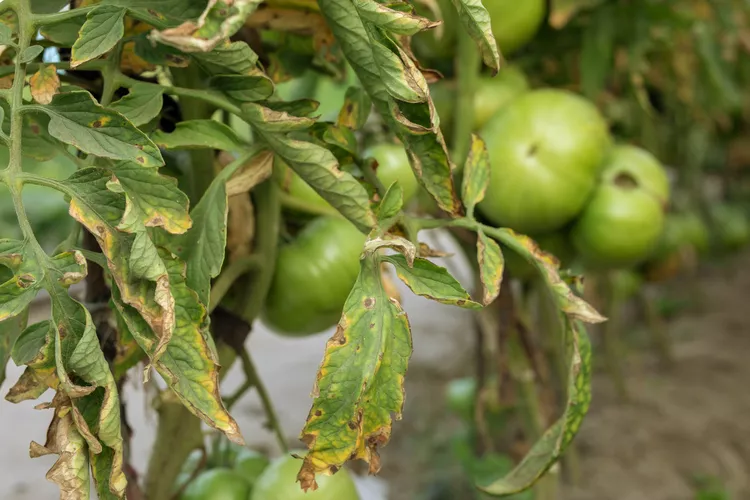
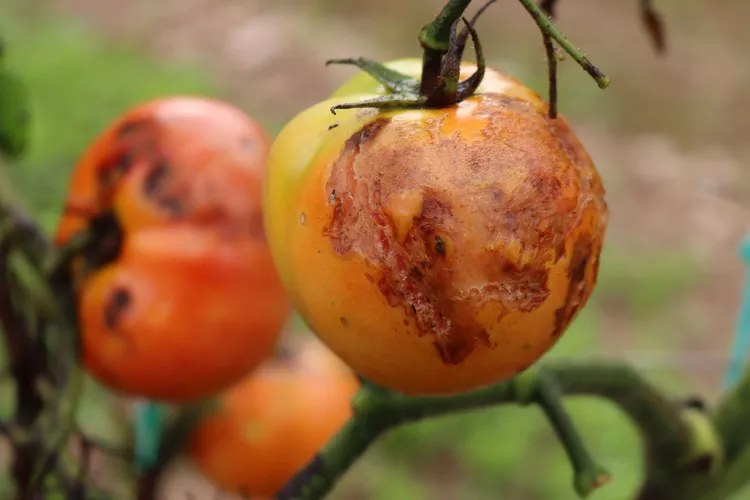
• Small, black lesions appear, mainly on older leaves. • Spots enlarge and develop characteristic concentric rings resembling a bull's-eye pattern. • The tissue surrounding the spots may turn yellow. • Under high temperature and humidity, large portions of the foliage may be killed. • Stem lesions resemble those on leaves and may girdle the plant near the soil line. • Fruits develop large lesions, usually near the calyx or stem attachment. • Fruit lesions may involve nearly the entire fruit and show concentric rings.

Recommendations (8)
Azoxystrobin 11% + Tebuconazole 18.3% w/w (SC)
Azoxystrobin 8.3% + Mancozeb 66.7% (WG)
Tebuconazole 38.39% w/w (SC)
Cyproconazole 12.5% + Tebuconazole 12.5% (SC)
Boscalid 25.2% + Pyraclostrobin 12.8% (WG)
Metiram 55% + Pyraclostrobin 5% (WG)
Famoxadone 16.6% + Cymoxanil 22.1% (SC)
Fluxapyroxad 75 g/l + Difenoconazole 50 g/l (SC)

Late blight

Late blight

Causal organism

Phytophthora infestans

Symptoms

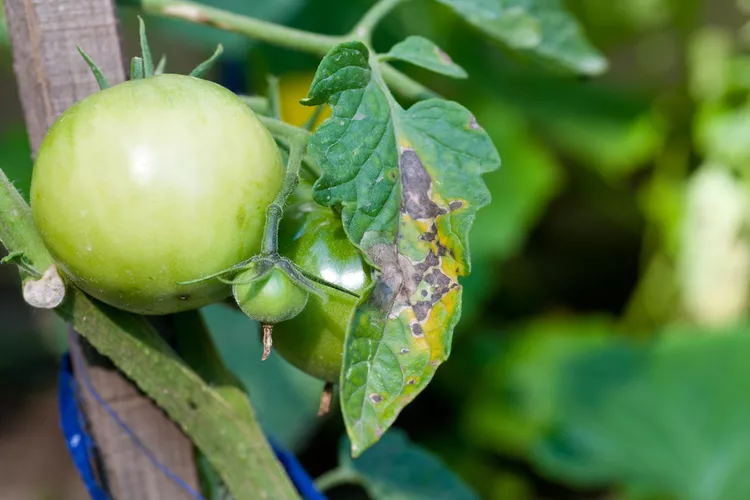
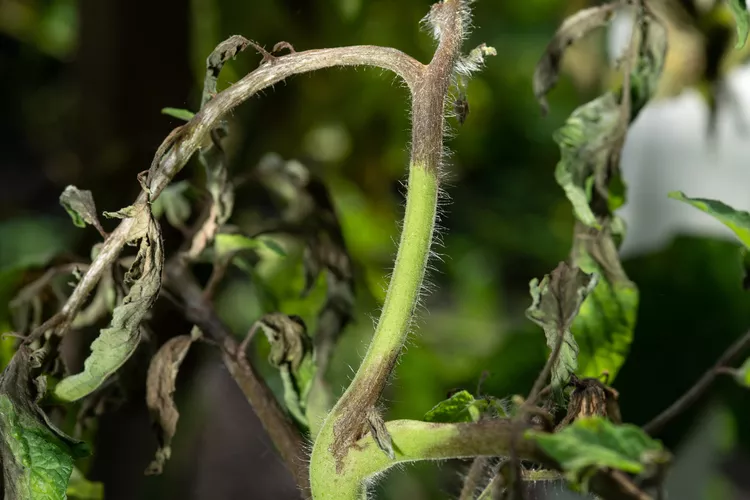
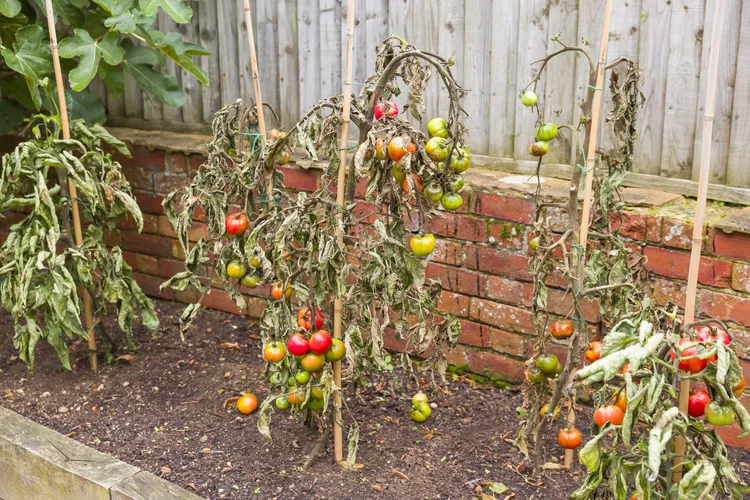
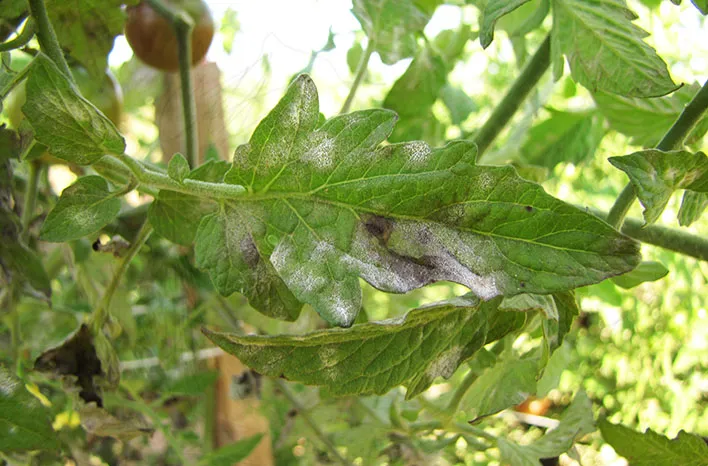
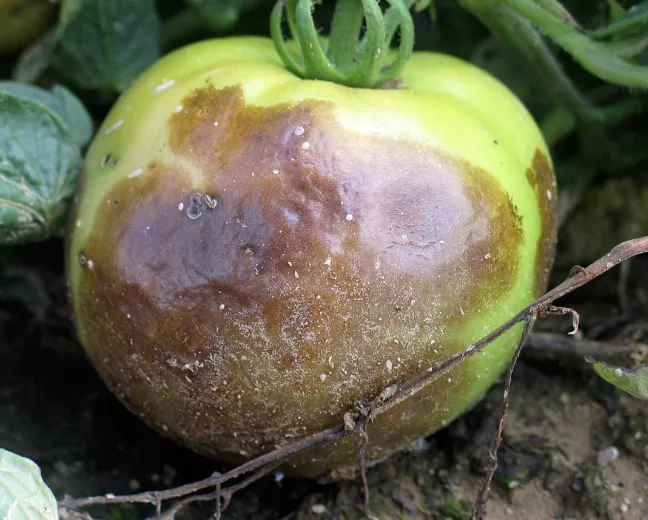
All aboveground plant parts may be affected. Leaves develop small to moderately sized, irregular pale-brown patches, approximately 2–10 mm initially, sometimes with a purplish tinge. Lesion margins are pale green or water-soaked. Lesions enlarge and merge rapidly, potentially killing entire leaflets. Under moist or humid conditions, white, downy fungal growth appears near the lesion margins on the lower leaf surface. Disease progression can be extremely rapid, resulting in severe defoliation across entire fields within approximately two weeks under favourable conditions. In dry weather, affected plants may appear scorched, with shrivelled foliage, although disease progression slows or stops. Stem and petiole lesions are dark brown and water-soaked; fungal growth may occur on them. Stem lesions may kill entire sections of the plant or remain superficial and dry out. Fruits may be infected at any stage of development, often beginning near the stem end. Fruit lesions are olive-brown with a rough, leathery surface and may spread until the entire fruit is affected. Infected fruits initially remain firm, with uneven discoloration of internal tissues. White fungal growth may develop on affected fruit surfaces under humid conditions. Secondary organisms may invade the lesions, causing soft rot.

Recommendations (6)
Azoxystrobin + Mancozeb (WP)

During early symptoms

Azoxystrobin 18.2% + Difenoconazole 11.4% w/w (SC)
Azoxystrobin 25% + Boscalid 35% (WG)
Ametoctradin 27%+ Dimethomorph 20.27% w/w (SC)
Cyazofamid 34.5% (SC)
Mandipropamid 23.4% (SC)

Septoria leaf spot

Septoria leaf spot

Causal organism

Septoria lycopersici

Symptoms

Numerous small circular spots with grey centre and dark margin occur on leaves. severe infection causes leaf fall. The disease can attack plants at any stage of growth.

Recommendations (4)
Azoxystrobin 4.8% w/w + Chlorothalonil 40% w/w (SC)
Azoxystrobin 25% + Boscalid 35% (WG)
Fluxapyroxad 75 g/l + Difenoconazole 50 g/l (SC)
Mefentrifluconazole 200 g/l + Pyraclostrobin 200 g/l (SC)

Bacterial wilt

Bacterial wilt

Causal organism

Ralstonia solanacearum

Symptoms

Wilting first appears on the youngest leaves during hot daytime conditions. Affected plants may recover temporarily during the evening when temperatures fall. Within a few days, sudden and permanent wilting may occur. Under less favourable conditions for disease development, plants may show stunting, with lower leaves turning yellow before wilting develops. The vascular tissues of the roots and lower stem become brown. Infected roots may rot due to secondary bacterial infection. When an infected stem is cut and placed in a container of clear water, yellowish or greyish bacterial ooze emerges from the cut end. In severe cases, rapid and complete wilting may occur while the foliage is still green.

Recommendations (1)
Kasugamycin 3% (SL)

There is no proven control for the disease. Drenching of root with Kasugamycin together with Copper oxy chloride may reduce further spread. If incidence is more, follow proper crop rotation for few seasons.

Fusarium wilt

Fusarium wilt

Causal organism

Fusarium oxysporum f.sp. lycopersici

Symptoms

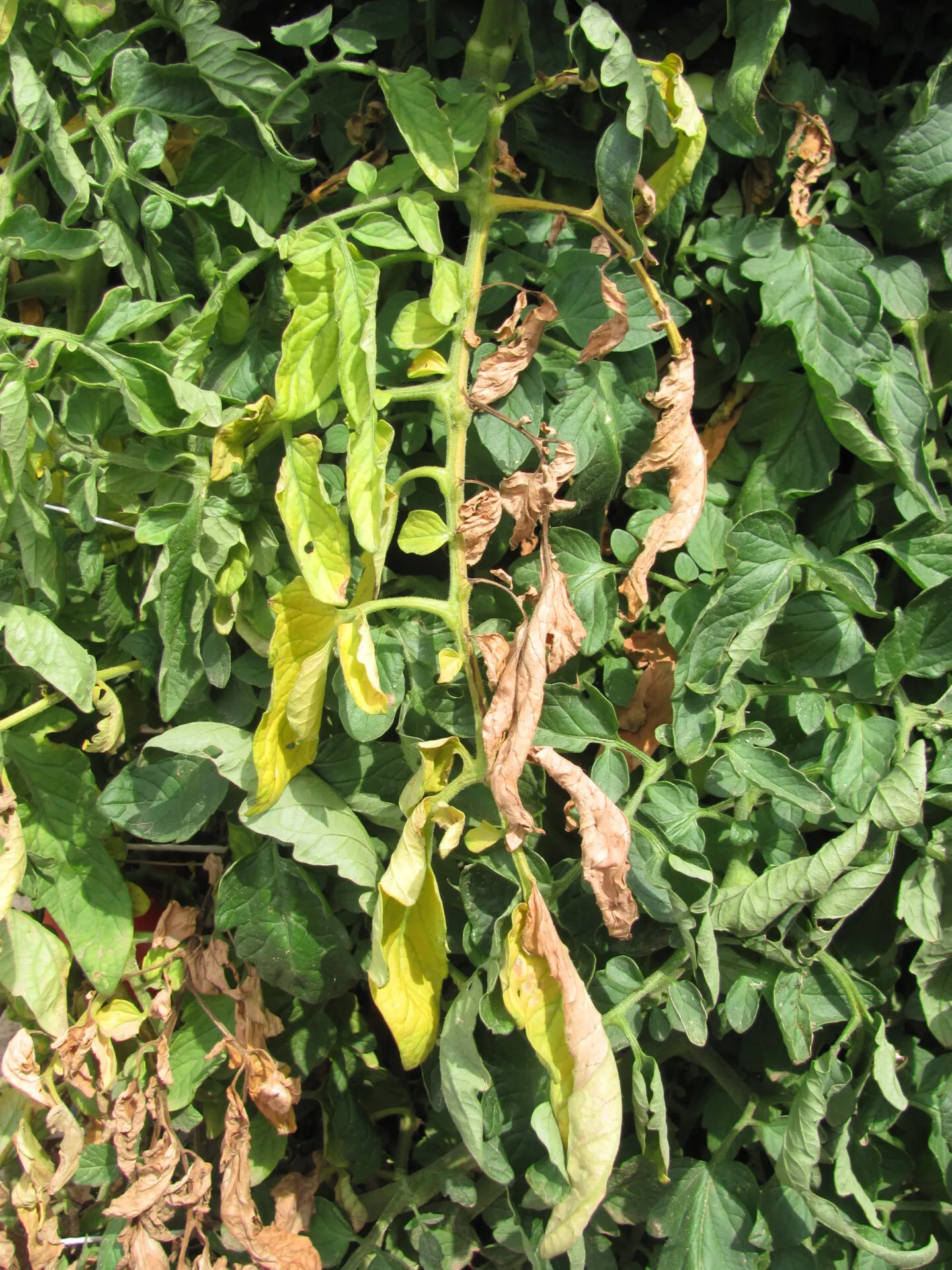
The first symptoms are yellowing of the foliage, beginning with the lower leaves and progressing upwards. Yellowing often begins on one side of the plant. Veinlets may become clear or translucent, followed by chlorosis of the leaves. Infected leaves may curl downwards, followed by browning and drying. The upper portion of the plant may wilt during the day and recover at night during the early stages. Wilting progressively worsens until the entire plant becomes permanently wilted. Petioles and leaves droop as wilting advances. Browning of the vascular tissues becomes visible in infected stems and large leaf petioles. Root systems and affected plants become stunted. Plants infected at a young age generally exhibit more severe stunting than those infected later. In severe cases, young leaves may die successively and the entire plant may wilt and die.

Recommendations (1)
Copper Oxychloride 50% (WP)

Fusarium wilt is caused by soil-borne fungi. Once the fungus enters the plant's vascular system, chemical treatment generally cannot cure the infected plant. Therefore, management should focus on reducing soil-borne inoculum and preventing further infection. The spread will be high during high temperature and drought like conditions. Seedling dip with Bacillus subtilis and soil application of Bacillus subtilis within 30 days may help in disease prevention. If disease incidence is identified early, drenching of plants with copper oxy chloride or any systemic fungicide may help to reduce the spread.

Verticillium wilt

Verticillium wilt

Causal organism

Verticillium dahliae

Symptoms

The earliest visible signs almost always begin on the oldest, lowest leaves and slowly move up the plant. V-Shaped Lesions: This is the most distinct hallmark. Yellow (chlorotic) patches develop on the margins (edges) of the lower leaves. These patches usually form a distinct "V" shape, narrowing inward toward the leaf's midrib. Necrosis: The yellow tissue eventually dies, turning brown and dry. The transition zone between the dead brown tissue and the healthy green tissue often has a prominent yellow halo. Leaf Drop: As the disease progresses, these lower leaves completely wither, dry out, and drop off the plant. Because the fungus attacks the xylem (the water-conducting tissue), the plant struggles to stay hydrated, even in damp soil. Diurnal Wilting: The plant may droop or wilt during the hottest part of the day when transpiration rates are high, but then mysteriously recover overnight or during cool mornings. Stunting: Infected plants are noticeably smaller and less vigorous than healthy counterparts. Asymmetrical Symptoms: It is common for symptoms to appear on only one side of a plant, or even just one side of a single leaf, depending on which vascular bundles are infected. Vascular Discoloration: If you slice the main stem vertically or make a cross-section near the soil line, you will see a light tan to light brown discoloration just under the surface in the vascular ring. Unlike Fusarium: This browning is usually lighter in color and extends only 10 to 12 inches up the stem. In contrast, Fusarium wilt causes a dark brown/black discoloration that extends much higher up the plant border.

Recommendations

No recommendations available

Powdery mildew

Powdery mildew

Causal organism

Leveillula taurica, Oidium neolycopersici

Symptoms

Symptoms generally begin on the lower, older leaves and gradually progress upwards. yellow blotches or spots appear on the upper leaf surface, while white powdery fungal growth develops on the lower surface or upper surface (Oidium neolycopersici) depending on the pathogen. Older fungal colonies may become dirty white with age. Severely affected leaves turn yellow, then brown, and eventually become shrivelled and dry. Severe infection may cause extensive defoliation, reduce yield and expose fruits to sunburn damage. Fruits and roots do not develop any visible symptoms.

Recommendations (4)
Hexaconazole 5.0% + Validamycin 2.50% (SC)
Tebuconazole 25% (WG)
Azoxystrobin 8.3% + Mancozeb 66.7% (WG)
Bupirimate 26.7% w/w (EC)

Anthracnose

Anthracnose

Causal organism

Colletotrichum spp.

Symptoms

Symptoms appear mainly on ripe fruits, often where fruits touch the soil or crop debris. Small, circular, sunken depressions develop on the fruit and may enlarge up to 12 mm in diameter. The centre of the lesion usually becomes tan and contains numerous dark fungal fruiting bodies arranged in concentric rings. Salmon-coloured fungal spores may appear on the lesion surface. Lesions may merge, affecting large portions of the fruit. Lesions may crack, allowing secondary organisms to enter and cause soft rot. Green fruits may become infected without showing visible symptoms until ripening; this is known as latent infection. Foliage symptoms are uncommon and appear as small, circular, brown lesions surrounded by yellow halos. Infected roots show brown, decayed internal tissues with numerous small black fungal fruiting structures beneath the surface. Root growth slows, resulting in yellowing and stunting of the plant.

Recommendations

No recommendations available

Bacterial spot

Bacterial spot

Causal organism

Xanthomonas spp.

Symptoms

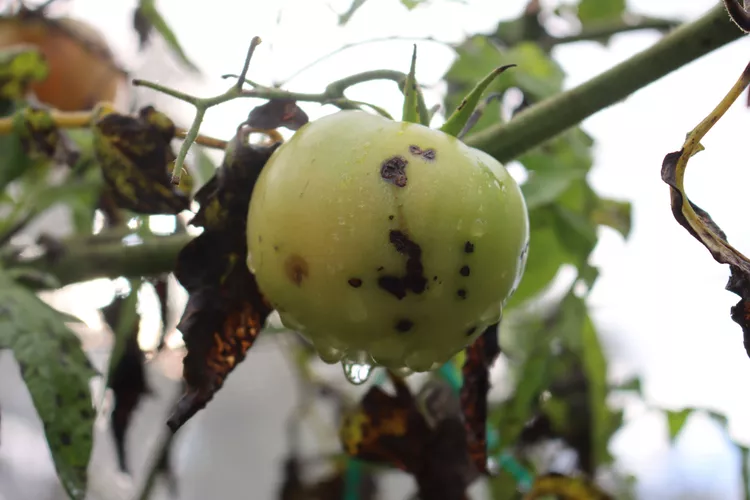
Small, dark, circular, water-soaked lesions develop on leaves, usually less than 3 mm in diameter. Lesions initially appear greasy on the upper leaf surface and later become brown-black and angular. Numerous lesions may merge, producing large blighted areas on the leaves. Affected leaves may turn yellow and either drop off or dry while remaining attached to the plant. Symptoms are generally more numerous on young, susceptible tissues. Infected seedlings develop increasing leaf spotting, followed by yellowing and, in severe cases, defoliation. Stem and petiole lesions resemble leaf lesions but are elliptical in shape. Immature fruits develop small, raised, black specks surrounded by water-soaked borders. Fruit lesions enlarge and become brown, slightly sunken and scabby, sometimes surrounded by a halo. The fruit lesions are shallow and do not usually cause rot. Ripe fruits are rarely infected.

Recommendations

No recommendations available

Bacterial canker

Bacterial canker

Causal organism

Clavibacter michiganensis

Symptoms

Leaflets of affected plants show temporary and later permanent wilting. Light streaks develop at the junction of the petiole and stem. Streaks extend down the internode and upwards along the petiole. Canker-like openings may develop on stems, petioles and leaf midribs. When the stem is cut longitudinally, a creamy-white, yellow or brown line is visible along the phloem. Green fruits develop water-soaked spots surrounded by a white halo.

Recommendations

No recommendations available

Tomato Yellow Leaf Curl Virus

Tomato Yellow Leaf Curl Virus

Causal organism

Tomato yellow leaf curl virus

Symptoms

Plants become severely stunted, with shoots growing in an erect or upright manner. Leaflets become smaller, puckered and distorted. Leaflets curl upwards. Yellowing develops prominently along leaf margins and/or between the veins. Flowers may wither. Fruit set is greatly reduced following infection. Plants infected before flowering may produce extremely low yields. The appearance of fruits that do develop remains unaffected.

Recommendations

No recommendations available

Tomato Spotted Wilt Virus

Tomato Spotted Wilt Virus

Causal organism

Tomato spotted wilt virus

Symptoms

Young leaves of mildly infected transplants develop bronze or purplish-brown discoloration, followed by numerous small, dark spots. Bronzing may spread over large areas of the leaf surface. Affected leaf areas may roll inward and subsequently die. Severely infected transplants remain stunted. Shiny, dark-brown streaks develop on stems and petioles. Growing tips may die back. Fruits develop spots approximately 1 cm in diameter, with slightly raised, circular markings. Ripe fruits may become distorted and develop alternating red and yellow bands. Severe infection may cause extensive necrosis and plant death.

Recommendations

No recommendations available

Tomato Mosaic Virus

Tomato Mosaic Virus

Causal organism

Tomato mosaic virus

Symptoms

Symptoms may occur at any growth stage, and all parts of the plant may be affected. Leaves typically exhibit light- or dark-green mottling or mosaic patterns, accompanied by distortion of younger leaves. Plant stunting varies in severity. Severely affected leaves may develop a characteristic fern-like appearance with raised, dark-green areas. Fruit set may be greatly reduced. Green or ripe fruits may develop internal browning of the fruit wall, yellow blotches and necrotic spots. Depending on the virus strain, leaves, petioles, stems or fruits may develop yellow mottling or dark, necrotic streaks. Symptoms vary with the tomato variety, plant age at infection, environmental conditions and virus strain. Dual infection with Potato virus X (PVX) may cause severe symptoms known as double virus streak.

Recommendations

No recommendations available

Buckeye Rot

Buckeye Rot

Causal organism

Phytophthora parasitica and P. capsici

Symptoms

Brown spots develop on green and ripe fruits, often near the blossom end. Lesions develop concentric rings of alternating dark- and light-brown bands. The fruit surface remains firm and smooth, although the internal rotted tissue becomes mushy. Lesions may enlarge to cover half or more of the fruit. Young green fruits may become mummified. White, cottony fungal growth may appear on affected fruits under moist conditions. Fruits touching or lying close to the soil are particularly susceptible. Phytophthora infection may cause damping-off in seedlings and root and crown rot in plants of different ages. Infected roots develop brown, water-soaked lesions that extend into the lower stem. Severely affected roots become necrotic and decayed. In young plants, root and crown infection may cause rapid wilting. On stems, pale-green to brown cankers may develop and extend for more than 15 cm. Fine fungal growth may appear on stem cankers under wet conditions. Cankers may girdle the stem, causing wilting and plant death. With P. capsici there is no possibility of symptoms on leaves. But, foliage blight and defoliation may occur during prolonged rainy weather and warm temperatures. This may be followed by complete plant collapse.

Recommendations (2)
Propineb 70% (WP)
Mancozeb 75% (WP)