
Fusarium wilt — Tomato
Fusarium oxysporum f.sp. lycopersici
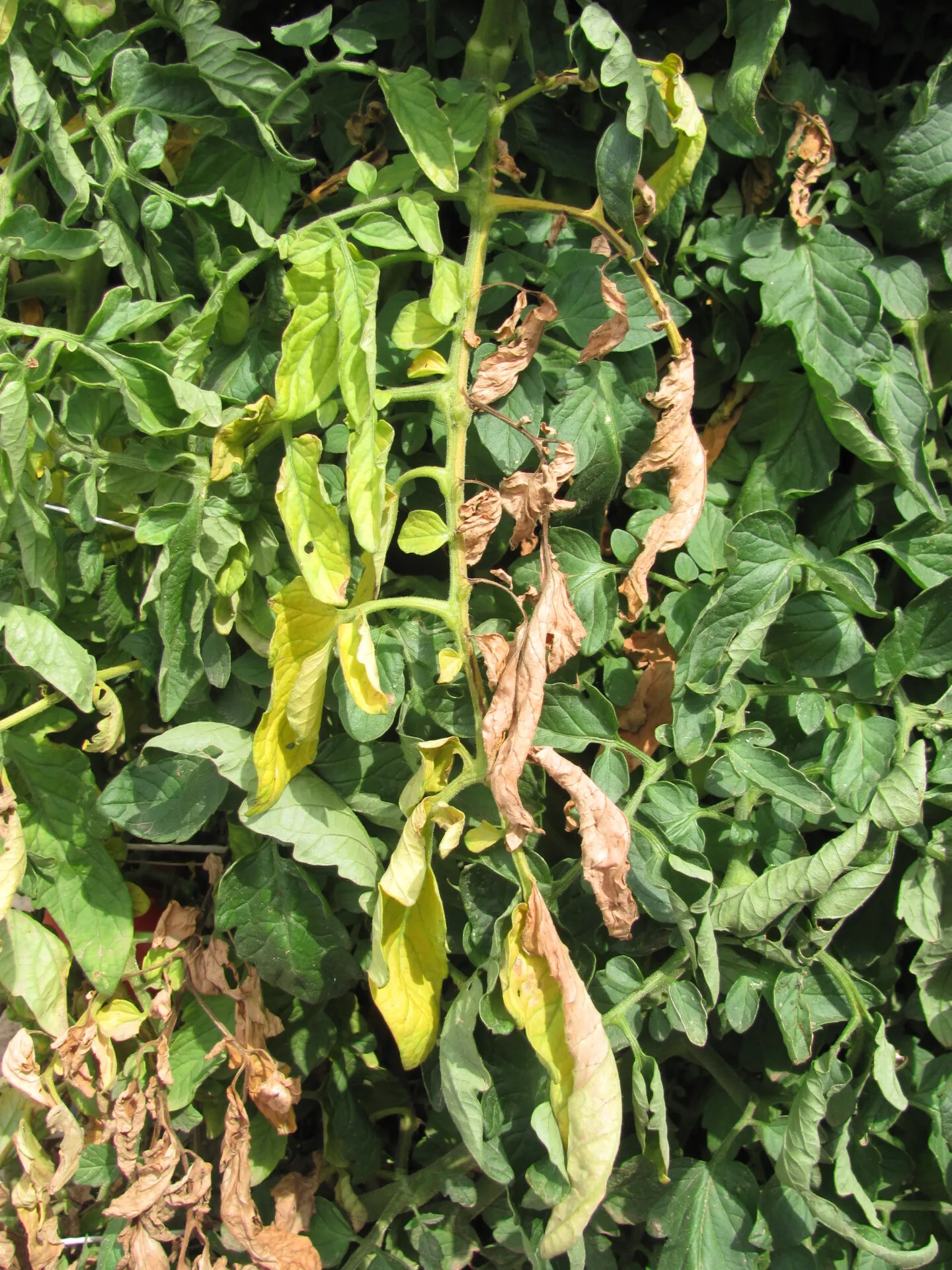
Symptoms
The first symptoms are yellowing of the foliage, beginning with the lower leaves and progressing upwards. Yellowing often begins on one side of the plant. Veinlets may become clear or translucent, followed by chlorosis of the leaves. Infected leaves may curl downwards, followed by browning and drying. The upper portion of the plant may wilt during the day and recover at night during the early stages. Wilting progressively worsens until the entire plant becomes permanently wilted. Petioles and leaves droop as wilting advances. Browning of the vascular tissues becomes visible in infected stems and large leaf petioles. Root systems and affected plants become stunted. Plants infected at a young age generally exhibit more severe stunting than those infected later. In severe cases, young leaves may die successively and the entire plant may wilt and die.
Recommendations
Fusarium wilt is caused by soil-borne fungi. Once the fungus enters the plant's vascular system, chemical treatment generally cannot cure the infected plant. Therefore, management should focus on reducing soil-borne inoculum and preventing further infection. The spread will be high during high temperature and drought like conditions. Seedling dip with Bacillus subtilis and soil application of Bacillus subtilis within 30 days may help in disease prevention. If disease incidence is identified early, drenching of plants with copper oxy chloride or any systemic fungicide may help to reduce the spread.