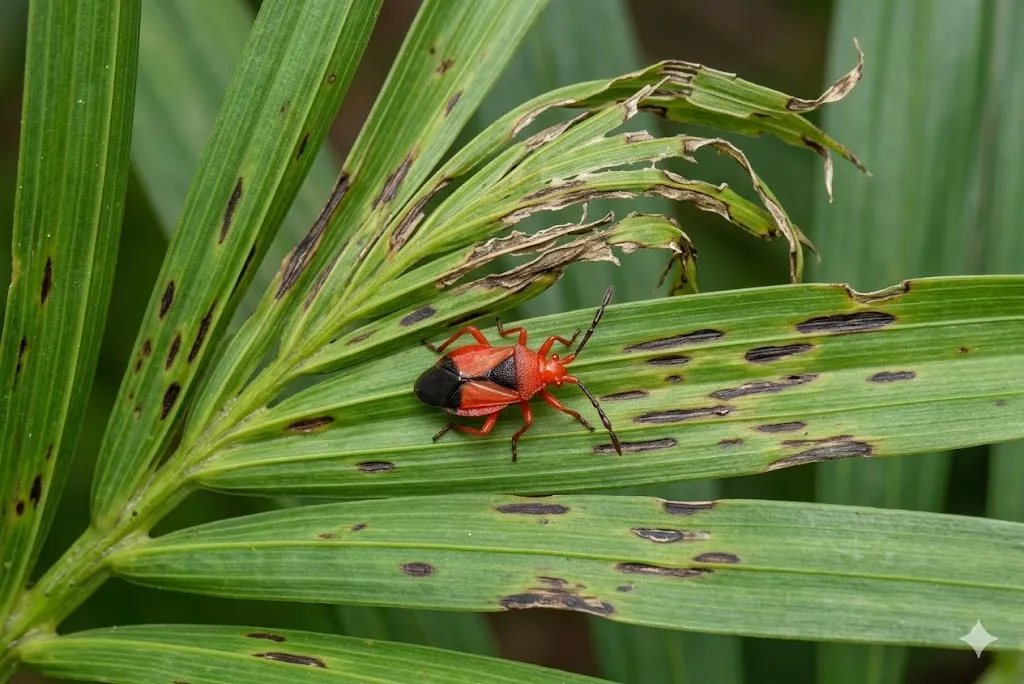
Spindle bug

Spindle bug

Causal organism

Carvalhoia arecae

Symptoms

Linear dark brown or black lesions appear on the unfurled spindle leaf (the newest, central leaf). As the damaged leaf eventually opens, it appears shredded, stunted, and dried. Severe attacks stunt the overall growth of the palm

Recommendations

No recommendations available
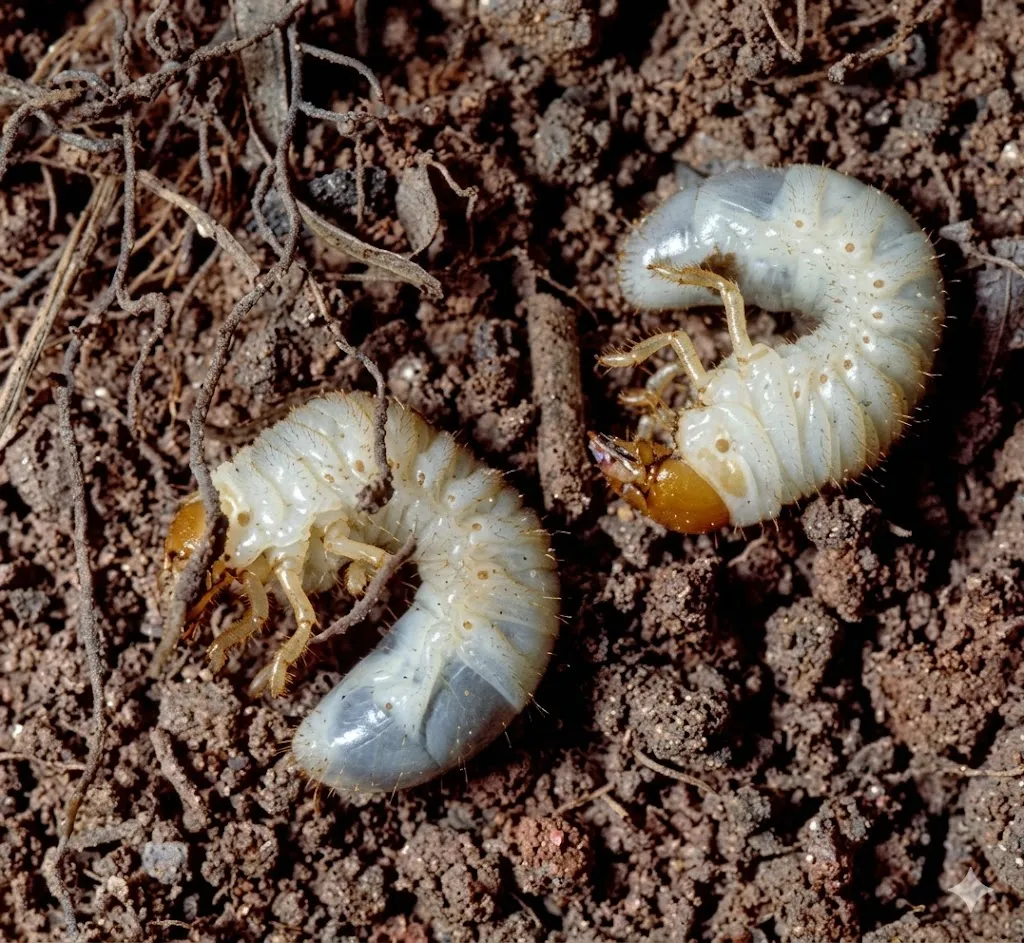
Root grub

Root grub

Causal organism

Leucopholis coneophora

Symptoms

The lowest, outer leaves turn pale yellow, droop, and drop off prematurely. Because the grubs feed on and destroy the tender feeding roots, the palm cannot absorb water or nutrients. The stem starts tapering at the crown, yield drops significantly, and the palm can die if left untreated

Recommendations

No recommendations available
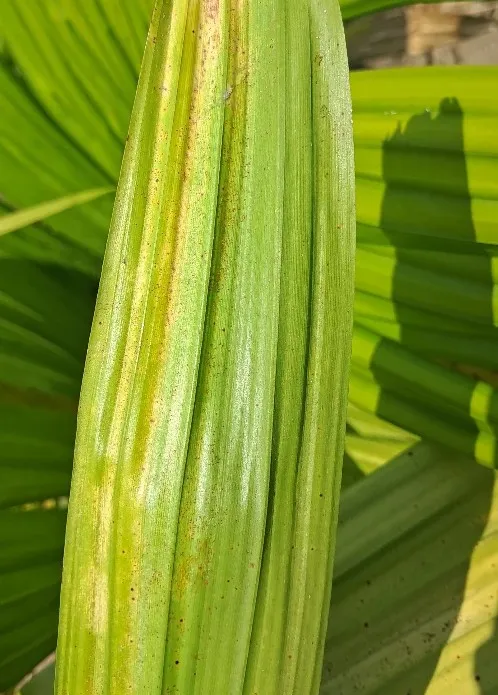
White mite

🌿

Causal organism

Oligonychus indicus

Symptoms

White mites congregate on the lower surface of the arecanut leaflets and suck the plant sap. This feeding causes small yellow or white speckles (stippling) to appear on the upper surface of the leaves. As the population multiplies, they spin fine, silken webs across the under-surface of the leaf. In cases of severe infestation, the leaves lose their green color, turn pale yellow, dry up, and eventually wither, drastically reducing the palm's ability to photosynthesize.

Recommendations

No recommendations available
Red mite

Red mite

Causal organism

Raoiella indica

Symptoms

Yellowing and bronzing of leaves, usually starting from the lower whorls and moving upward. Fine, silky webs can be seen on the under-surface of the leaflets along with colonies of tiny red or white mites. Severe infestation leads to entire leaves drying out and a general loss of palm vigor.

Recommendations (2)
Abamectin 1.90% (EC)
Spiromesifen 22.9% (AL)

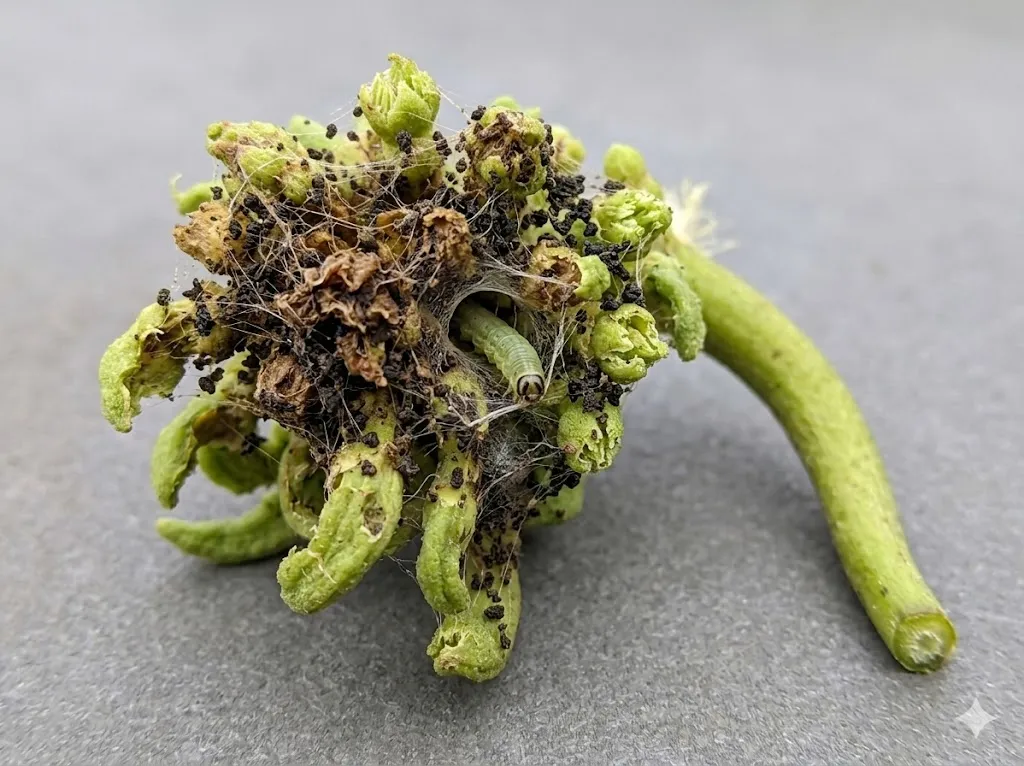
Inflorescence caterpillar

Inflorescence caterpillar

Causal organism

Tirathaba mundella

Symptoms

The caterpillars bore into the spathe (paalai) and feed on the tender male flowers and female buds (button nuts). You will see distinctive webbing made of silk and frass (insect droppings) covering the flower bunches. This leads to heavy shedding of the button nuts.

Recommendations

No recommendations available
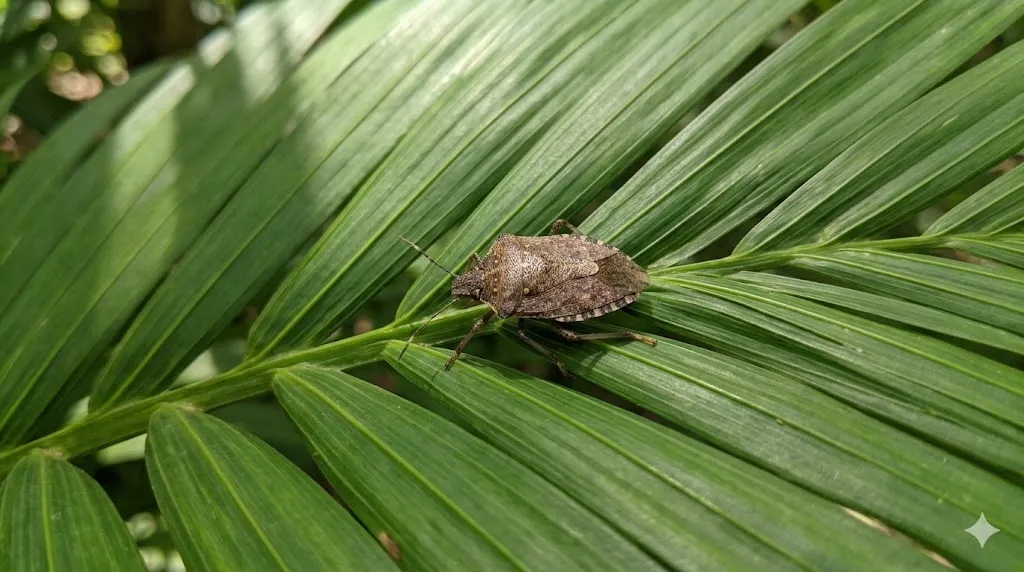
Pentatomid Bug

Pentatomid Bug

Causal organism

Halyomorpha marmorea

Symptoms

Both nymphs and adult bugs insert their needle-like mouthparts into tender nuts to feed. These feeding punctures appear as small, dark, pin-prick marks. The damaged tender nuts (buttons) lose their green color, shrivel, and eventually drop off prematurely. The feeding sites can also serve as entry points for secondary fungal infections.

Recommendations

No recommendations available
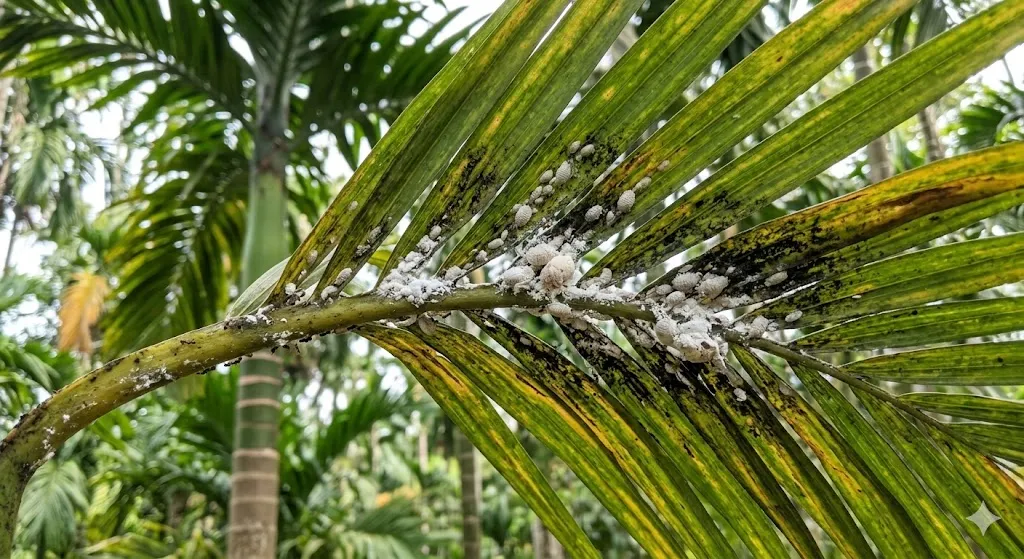
Mealy Bug

Mealy Bug

Causal organism

Pseudococcus sp.

Symptoms

clusters of small, oval insects covered in a white, powdery or cottony wax. They congregate in the leaf axils, on the spathes, and heavily infest the tender nut bunches. As they continuously suck sap, the leaves and developing bunches turn yellow and lose vigor. Mealybugs also excrete a sugary substance called "honeydew," which coats the plant parts and leads to the growth of black sooty mold, severely reducing the palm's ability to photosynthesize.

Recommendations

No recommendations available
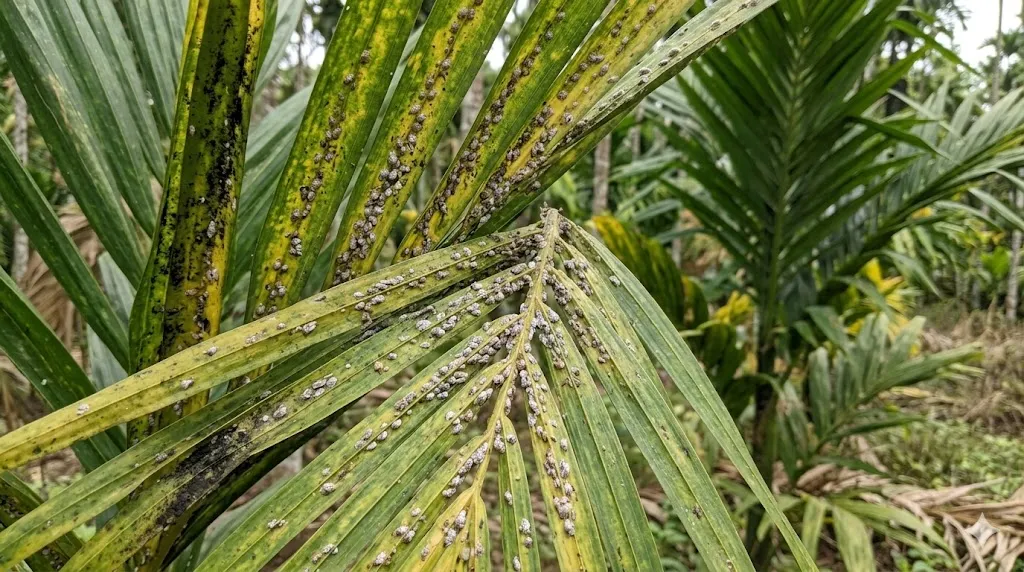
Scale insect

Scale insect

Causal organism

Ischnaspis longirostris

Symptoms

Appear as tiny, flat, or slightly raised waxy bumps (scales) firmly attached to the lower surface of leaflets, leaf stalks, and sometimes directly on the arecanuts. Because they remain in one spot sucking sap, localized yellow spots (chlorosis) develop around their feeding sites. In severe cases, the entire leaf turns yellow, dries up prematurely, and the palm's overall growth is stunted

Recommendations

No recommendations available