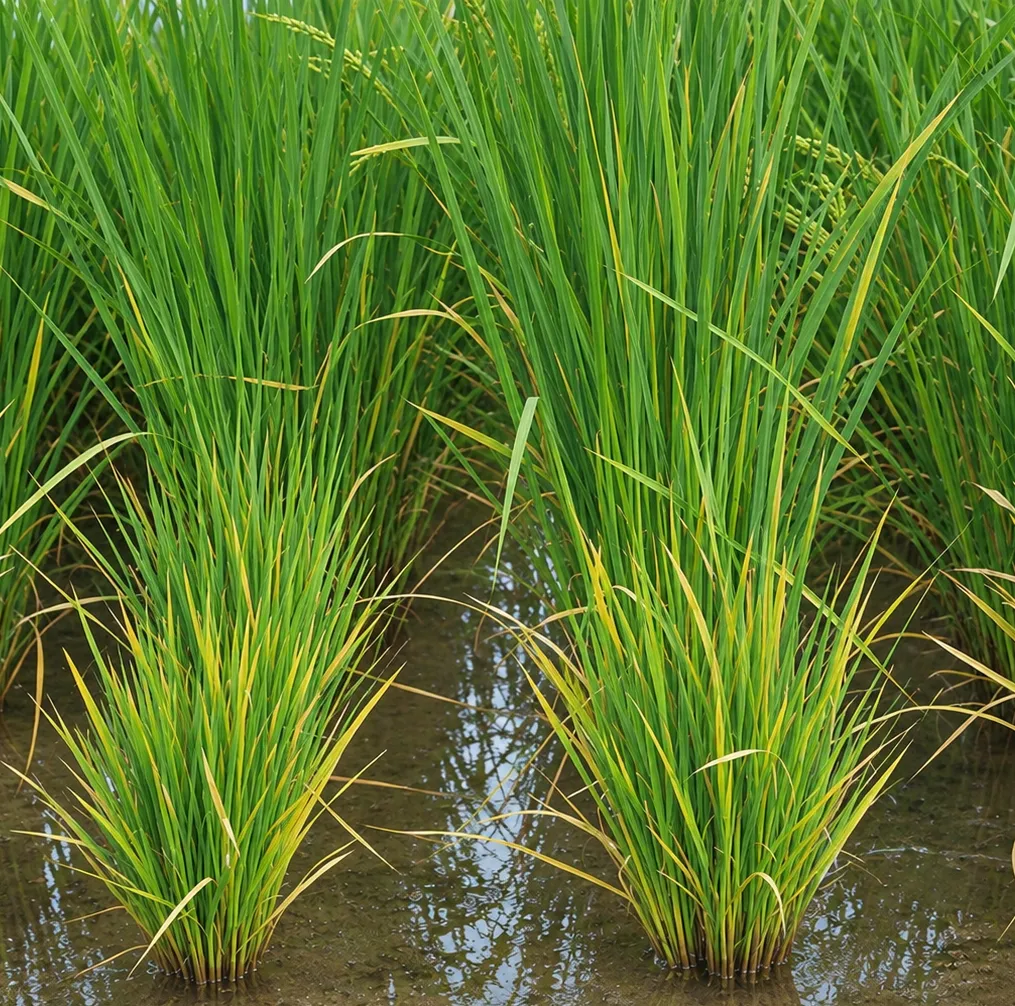
Rice blast
Causal organism
Pyricularia oryzae
Symptoms
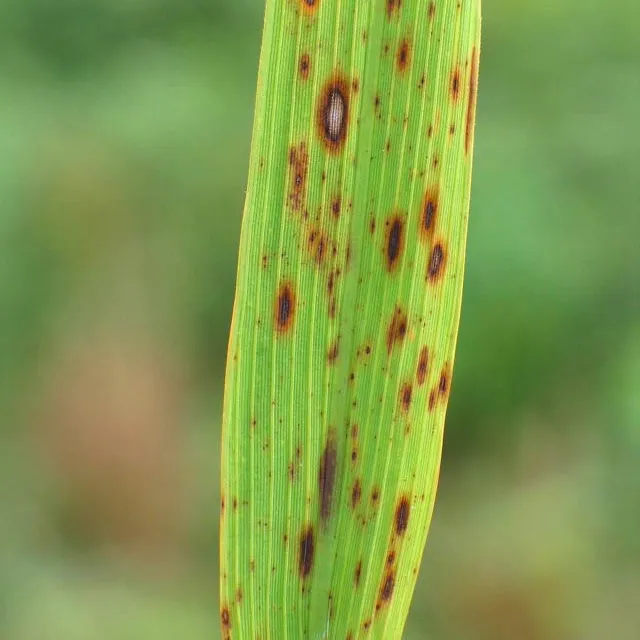
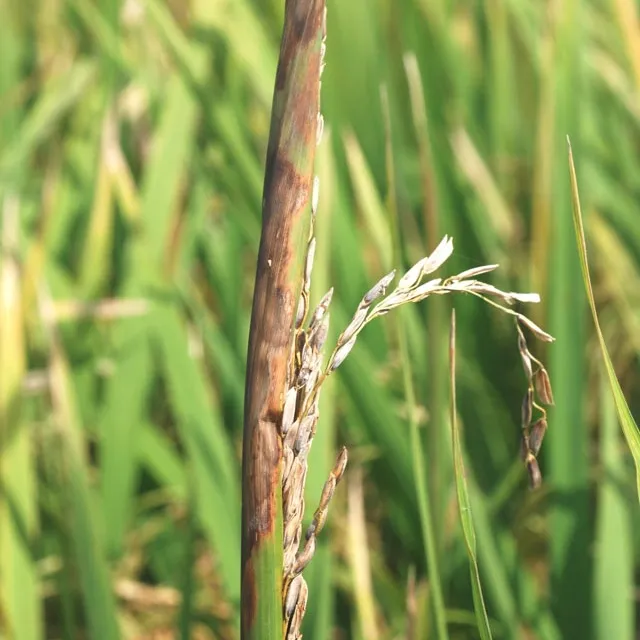
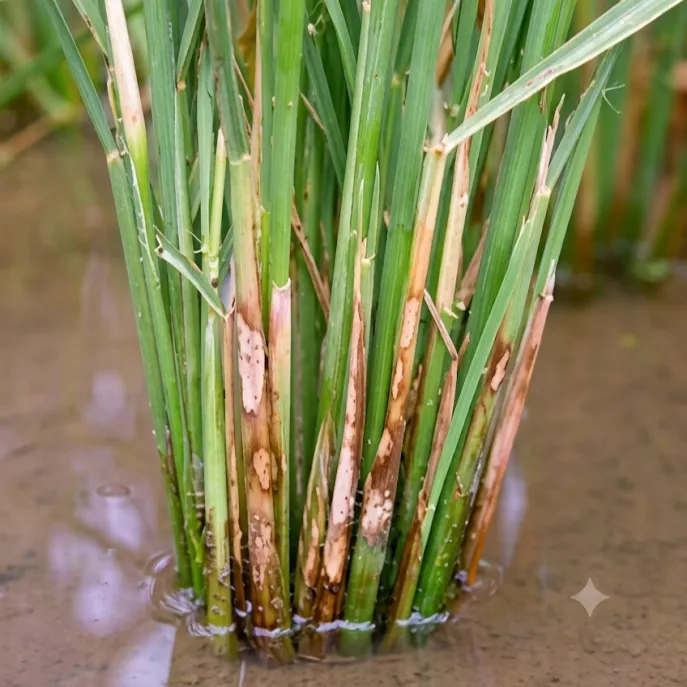
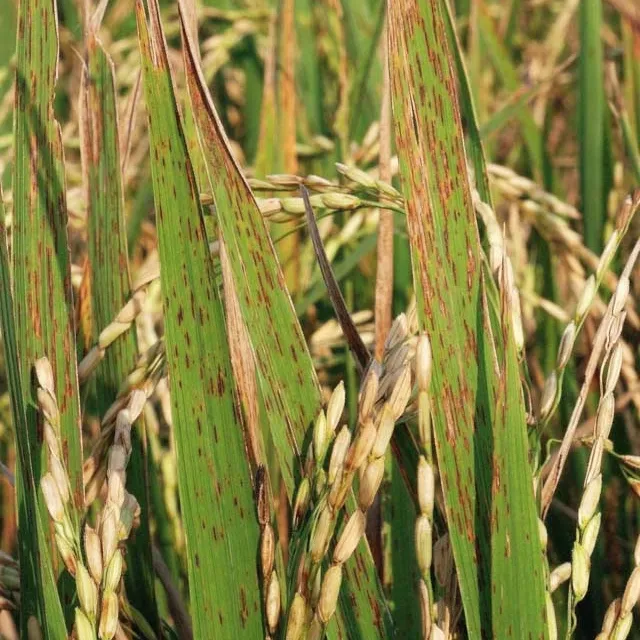
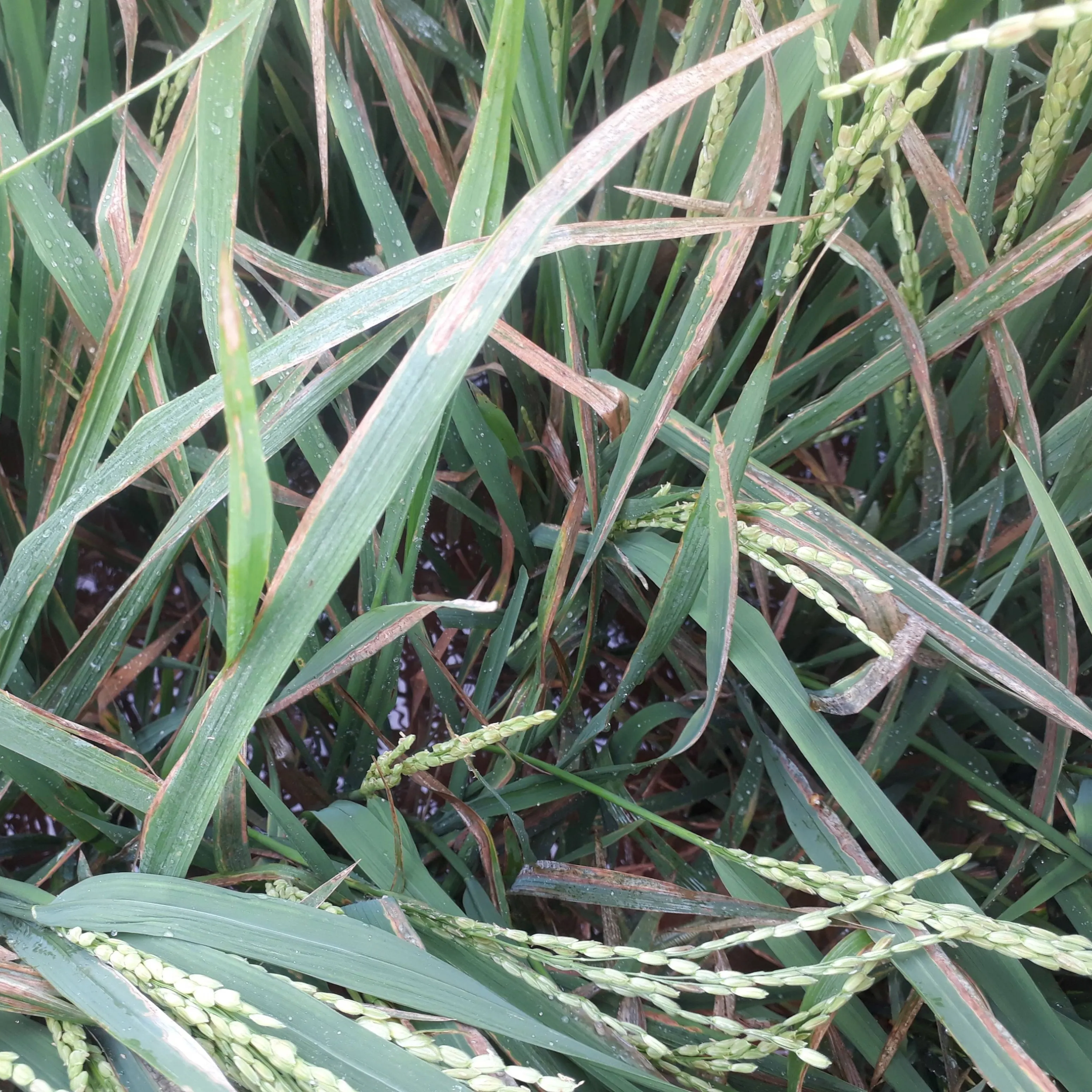
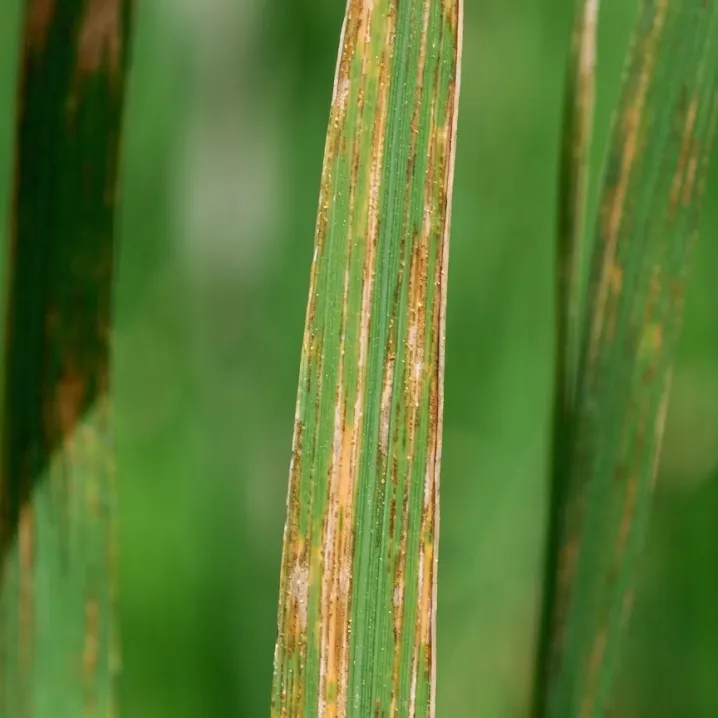
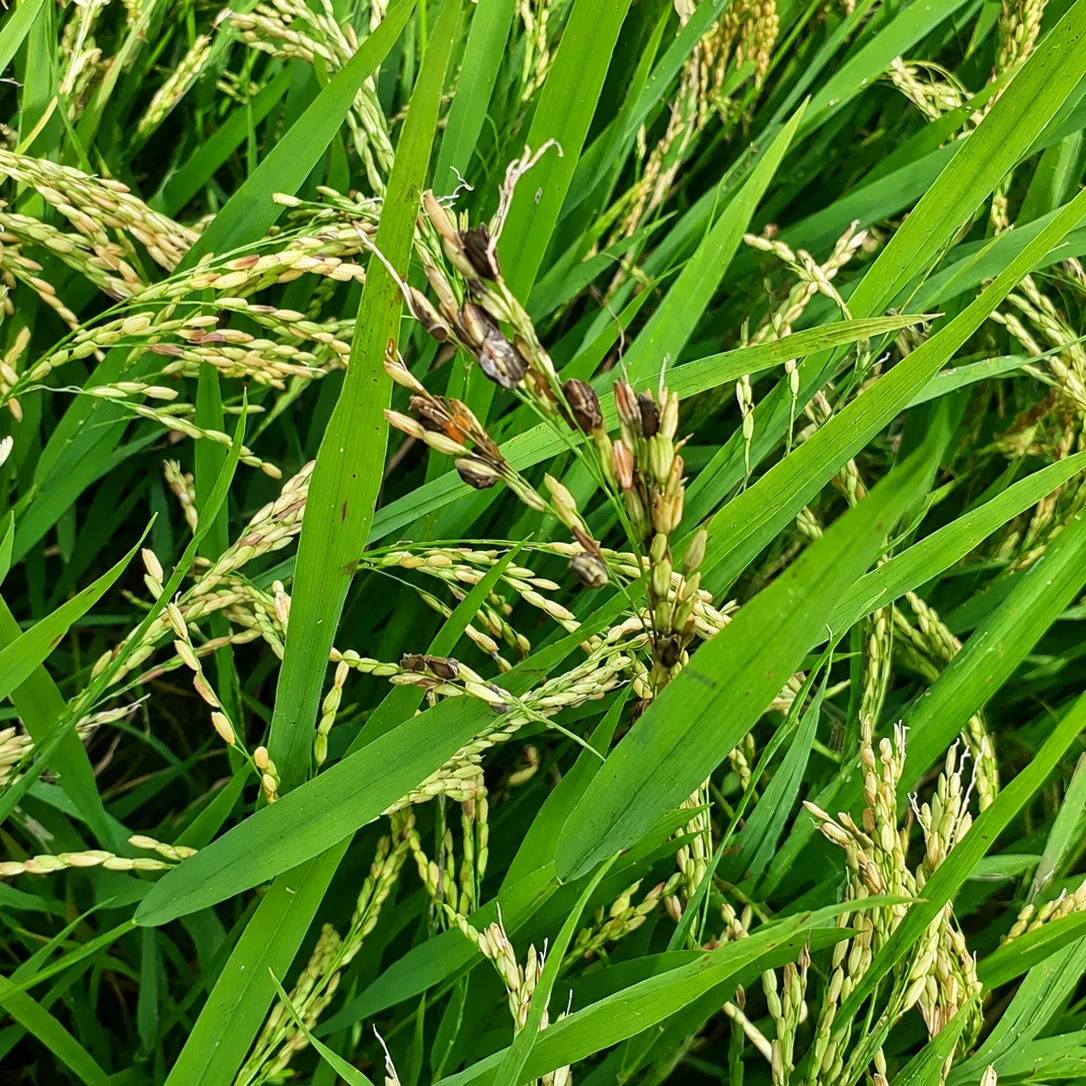
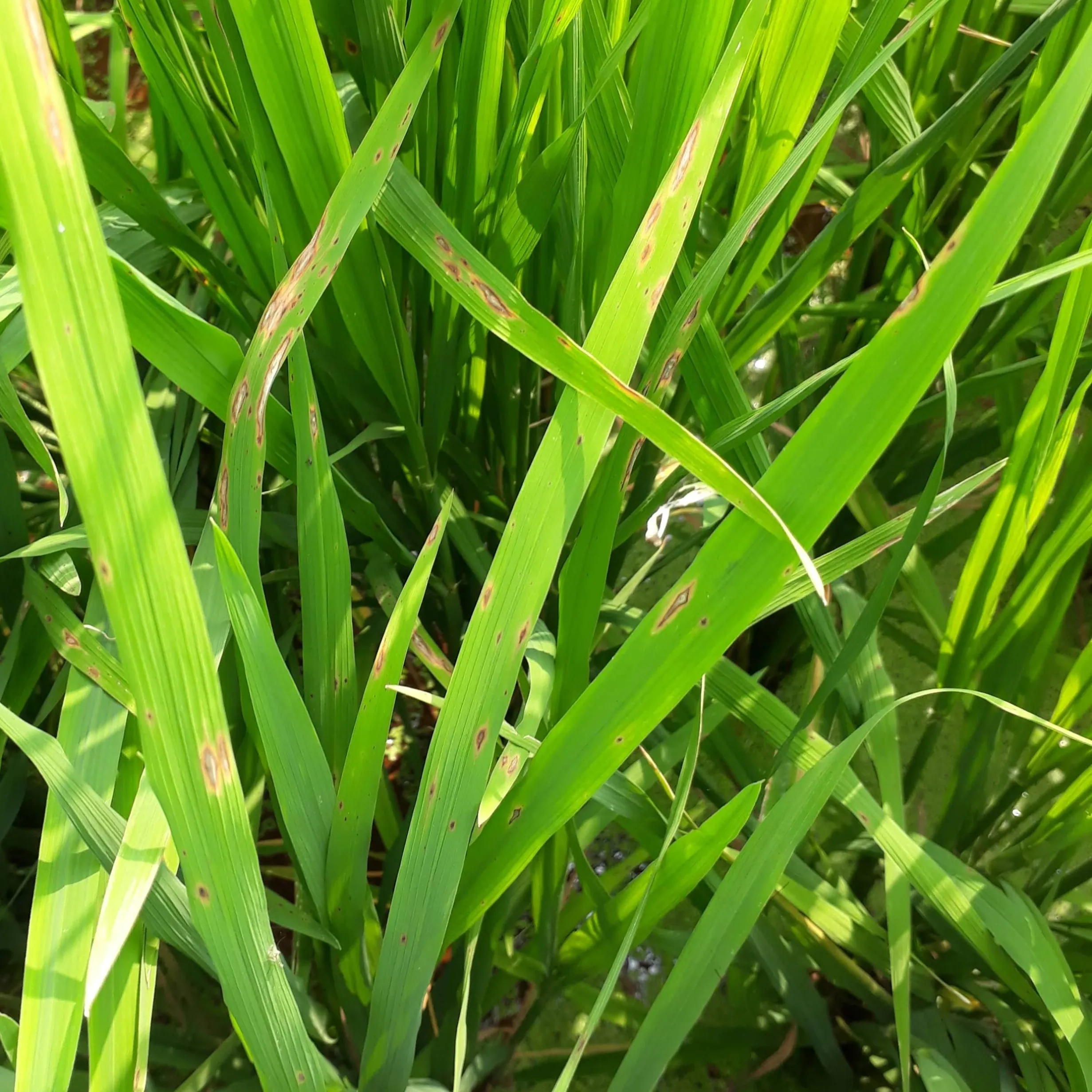
1. Seeling stage Small brown spots may develop on the leaves of young seedlings. As the lesions develop, they may become elongated or spindle-shaped, with brown margins and grayish or whitish centers. Lesions may enlarge and merge, causing portions of the leaf blade to dry out. In severe cases, seedlings may become weak, with extensive leaf blighting and reduced growth. The extent of damage depends on the susceptibility of the rice variety and the environmental conditions. 2. Tillering stage Initial symptoms Small, round or oval, dark-brown specks develop on the leaf blade. The spots may initially be small and difficult to distinguish from other leaf spots. As they enlarge, the lesions become oval, elongated or spindle-shaped. The center becomes grayish or whitish as the affected tissue dies. A narrow reddish-brown to dark-brown border develops around the lesion. Developing symptoms Lesions may develop pointed ends, producing the typical spindle or diamond-shaped appearance. The central gray dead tissue becomes more conspicuous, surrounded by the darker margin. Lesions vary in size and shape according to the variety, infection conditions and stage of development. Multiple lesions may occur on the same leaf, sometimes scattered across much of the blade. Severe symptoms Individual lesions enlarge and merge with neighboring lesions. Large portions of the leaf blade become necrotic, dry and brown. The affected leaf may become extensively blighted or die. Severe leaf infection reduces the healthy photosynthetic leaf area and can weaken the crop. 3. Stem elongation and booting stage — collar blast The leaf collar is the junction between the leaf blade and the leaf sheath. When the blast pathogen infects this region, the disease is called collar blast. A brown lesion develops at the collar, where the leaf blade joins the sheath. The affected collar tissue becomes necrotic and dries. As the lesion progresses, the connection between the leaf blade and sheath weakens. The leaf blade may detach from the sheath as the infected collar dries. Severe collar infection can cause the entire affected leaf blade to die, even when the rest of the leaf initially appears relatively healthy. 4. Stem elongation to maturity — node blast Node blast occurs when the pathogen infects a node of the rice culm. The infected node develops a dark-brown to black discoloration. As the disease progresses, the node may become shriveled and grayish or dark blue-gray. The infected tissue weakens and may become brittle. The culm may break at the affected node. Infected plants may lodge, particularly as the crop approaches maturity. Damage to the node can interfere with normal support and movement of water and nutrients through the affected stem. 5. Heading and flowering — neck blast Neck blast is one of the most damaging forms of rice blast because it affects the panicle-supporting neck. Initial symptoms: A grayish-brown or brown lesion develops on the panicle neck, immediately below the panicle. The lesion expands around the neck and may gradually girdle it. Infected tissue becomes discolored and begins to dry. Developing symptoms: As the lesion enlarges, the affected neck becomes weakened. The flow of water and nutrients to the developing panicle may be disrupted. The panicle may begin to droop or lose its normal upright position. Grain development may be impaired, depending on when infection occurs and how much of the neck is affected. Severe symptoms: The neck may become completely girdled by the lesion. The panicle may turn pale, grayish or whitish and fail to fill properly. The panicle may droop sharply or break at the infected neck. Severe infection can result in substantial grain loss from the affected panicle. 6. Panicle emergence and grain formation — panicle blast Blast can also infect panicle branches and spikelets, even when the most conspicuous lesion is not at the neck. Brown lesions develop on the branches of the panicle. Lesions may also appear on the smaller stalks supporting individual spikelets. Infected branches or spikelets may dry and become brown. Affected florets may fail to develop normally, producing partially filled or empty grains. Depending on the position and severity of infection, portions of the panicle may remain poorly developed. When infection involves the neck as well as the branches, the entire panicle may dry, droop or collapse. Key identification: Spindle-shaped lesions with gray centers and brown margins.