Stem borer

Stem borer

Causal organism

Scirpophaga incertulas

Symptoms

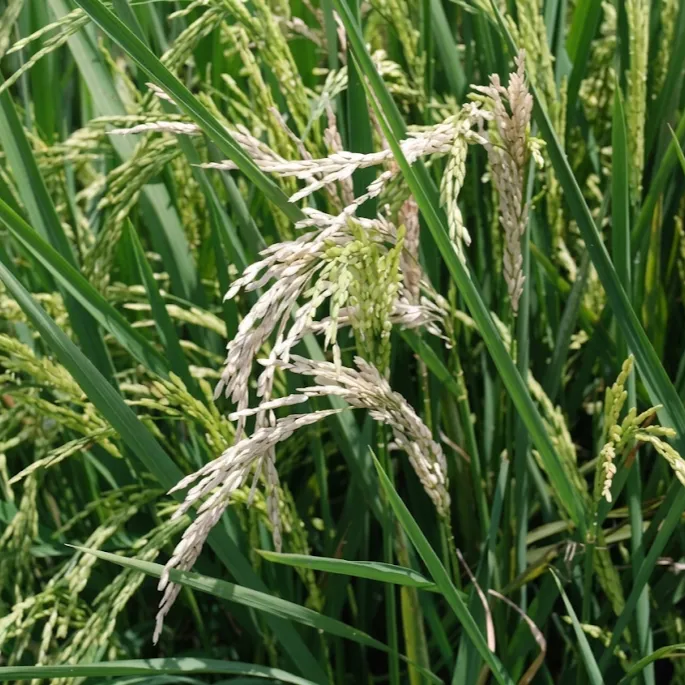
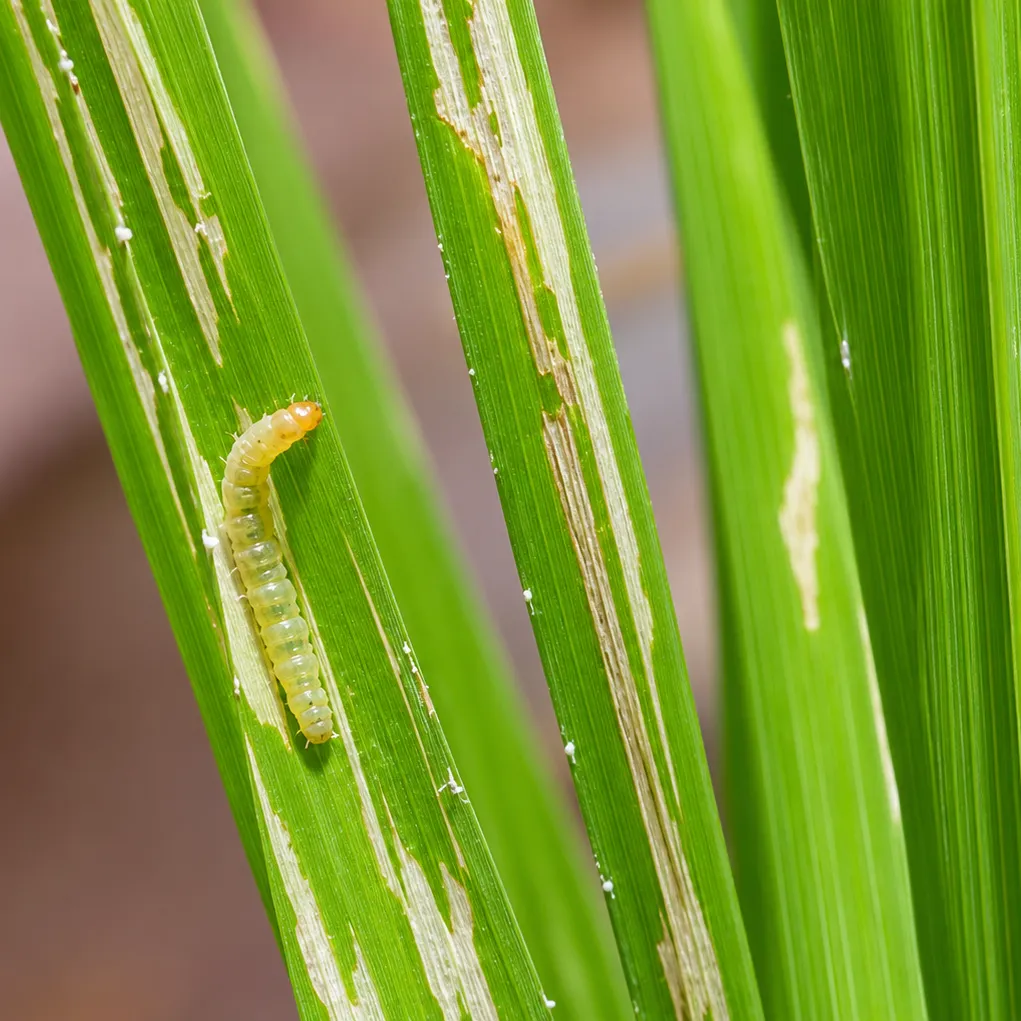
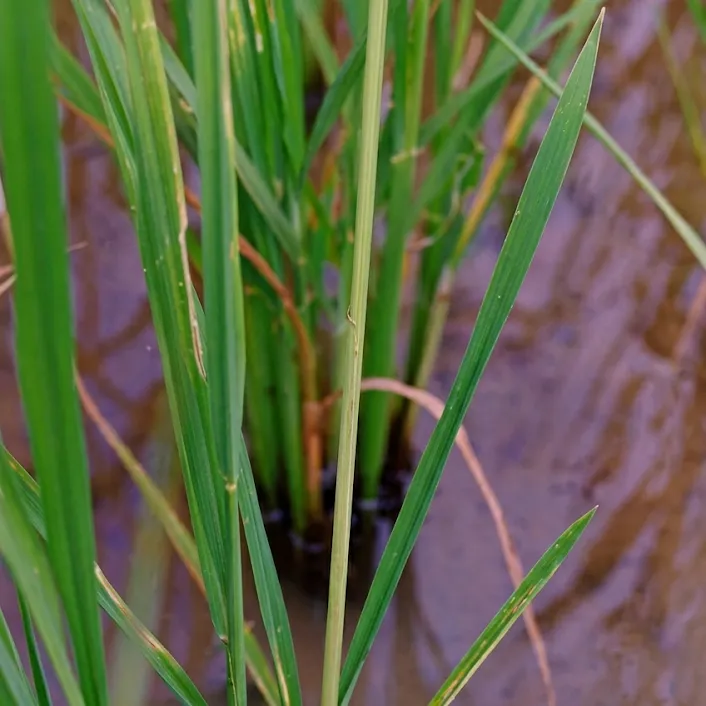
Deadheart: During the vegetative stage, the central shoot of an affected tiller turns brown, dries up and dies. The dead central shoot can often be pulled out easily from the base. Whitehead: During the reproductive stage, the emerging panicle becomes whitish, dries prematurely and contains unfilled or empty grains. Tiny holes may be visible on the stem or tiller where the caterpillar entered. When an affected stem is split open, a caterpillar, feeding tunnel or accumulated frass (insect excreta) may be found inside. Severe infestation reduces the number of productive tillers and can cause extensive crop damage. Diagnostic distinction: Deadhearts are characteristic of stem borer injury during vegetative growth, whereas whiteheads are characteristic during reproductive growth. These symptoms can resemble other problems, so inspect the stem for borer larvae, tunnels and frass.

Description

Stem borer variants: Yellow stem borer — Scirpophaga incertulas White stem borer — Scirpophaga innotata Striped stem borer — Chilo suppressalis Gold-fringed stem borer — Chilo auricilius Dark-headed striped stem borer — Chilo polychrysus Pink stem borer — Sesamia inferens
Recommendations (8)
CartapHydrochloride 50% (SP)
Chlorantraniliprole 18.5% (SC)
Flubendiamide 20% (WG)
Indoxacarb 10% + Thiamethoxam 10% (WG)
Flubendiamide 00.70% (GR)
Chlorantraniliprole 00.40% (GR)
Chlorantraniliprole 0.35% + Fipronil 0.35% (CG)
Chlorantraniliprole + Fipronil 0.35 + 0.35% (GR)

Leaf folder

Leaf folder

Causal organism

Cnaphalocrocis medinalis

Symptoms

Caterpillars fold the leaf blade lengthwise and fasten its margins with silken threads. The folded leaf forms a tubular shelter containing the feeding caterpillar. Feeding scrapes away the green tissues, leaving long, whitish or translucent streaks parallel to the leaf veins. The affected leaf may appear scraped, bleached or papery. Fecal pellets may be present inside the folded leaf. Under severe infestation, numerous folded leaves make the crop appear scorched. Diagnostic distinction: A folded leaf enclosing a caterpillar, together with longitudinal translucent streaks, strongly indicates leaffolder damage.

Recommendations (3)
Chlorpyrifos 50% + Cypermethrin 5% (EC)
Emamectin benzoate 05% (SG)
Acephate 50% + Imidacloprid 1.80% (SP)

Gall midge

Gall midge

Causal organism

Orseolia oryzae

Symptoms

The growing point of an infested tiller develops into a hollow, tubular, silvery-white gall. The gall elongates into a structure resembling an onion leaf, commonly called silver shoot or onion leaf. The affected tiller fails to develop normal leaves and does not produce a normal panicle. Leaves may become deformed, rolled or wilted. Infested plants may become stunted. Diagnostic distinction: The characteristic silver shoot is the most important field symptom. Unlike stem borer injury, which causes deadhearts or whiteheads, gall midge produces a conspicuous tubular gall in place of normal shoot development.

Recommendations (3)
Thiamethoxam 75% (WG)
Carbosulfan 25% (EC)
Lambda-cyhalothrin 05% (EC)

Brown plant hopper

Brown plant hopper

Causal organism

Nilaparvata lugens

Symptoms

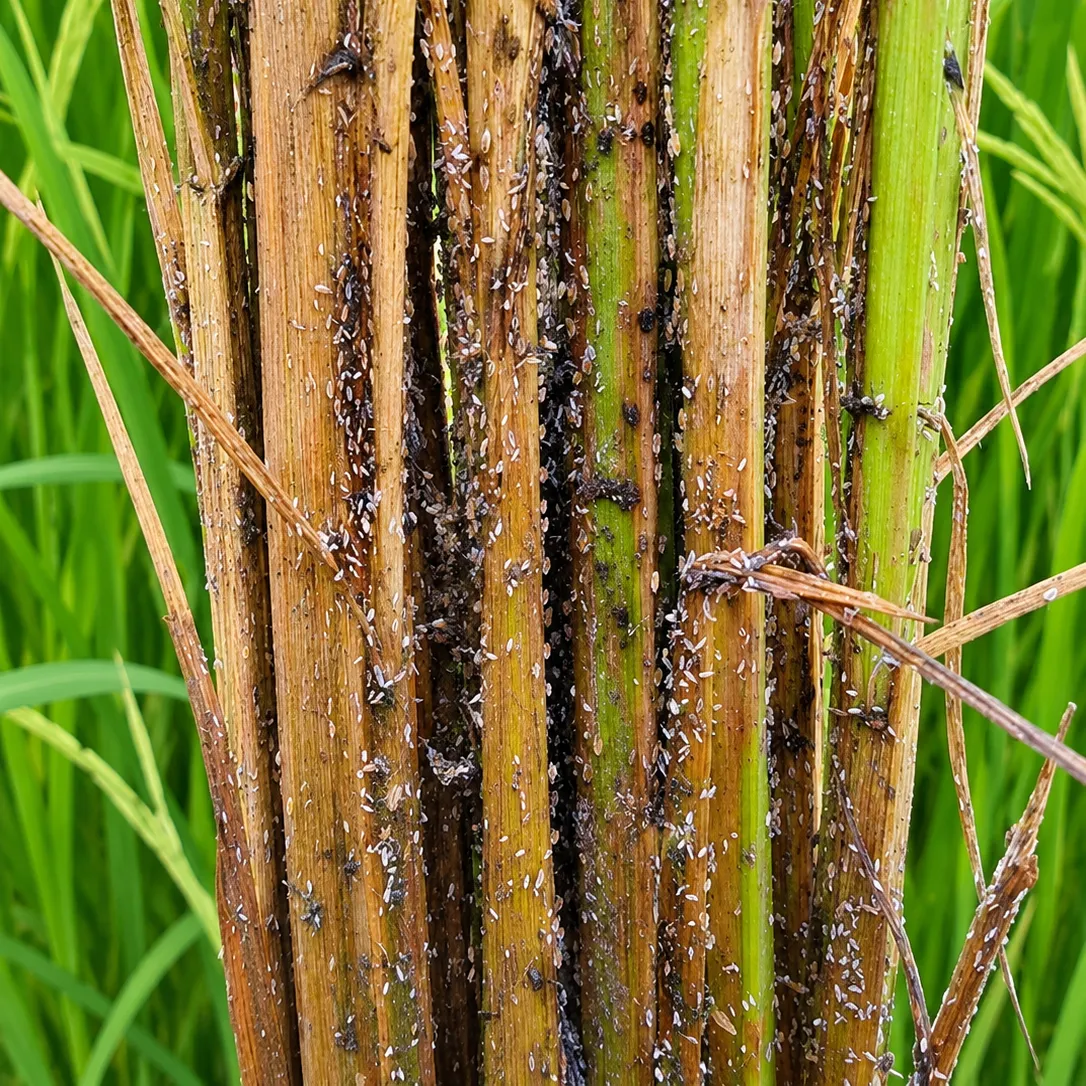
Nymphs and adults suck sap from the lower portions of the rice plant, particularly around the base of tillers. Initially, leaves turn yellow or orange-yellow. As infestation increases, the affected plants turn brown, dry up and die, producing characteristic patches called hopperburn. Honeydew excreted by the insects encourages the growth of black sooty mould around the base of infested plants. Heavy infestation can cause extensive patches of dead rice plants. Brown planthoppers can transmit rice ragged stunt and rice grassy stunt viruses, producing additional disease symptoms. Diagnostic distinction: Look for large numbers of planthoppers near the plant base, honeydew and sooty mould associated with yellowing and drying. Hopperburn may resemble damage caused by the rice black bug.

Recommendations (7)
Thiamethoxam 75% (WG)
Clothianidin 50% (WDG)
Dinotefuran 20% (SG)
Pymetrozine 50% (WG)
Nitenpyram 25% (SP)
Dinotefuran 11% + Pymetrozine 36% (WG)

For severe damage

Dinotefuran 12% + Thiamethoxam 22.5% + Pymetrozine 30% (WG)

For severe damage symptoms

Thrips

Thrips

Causal organism

Stenchaetothrips biformis

Symptoms

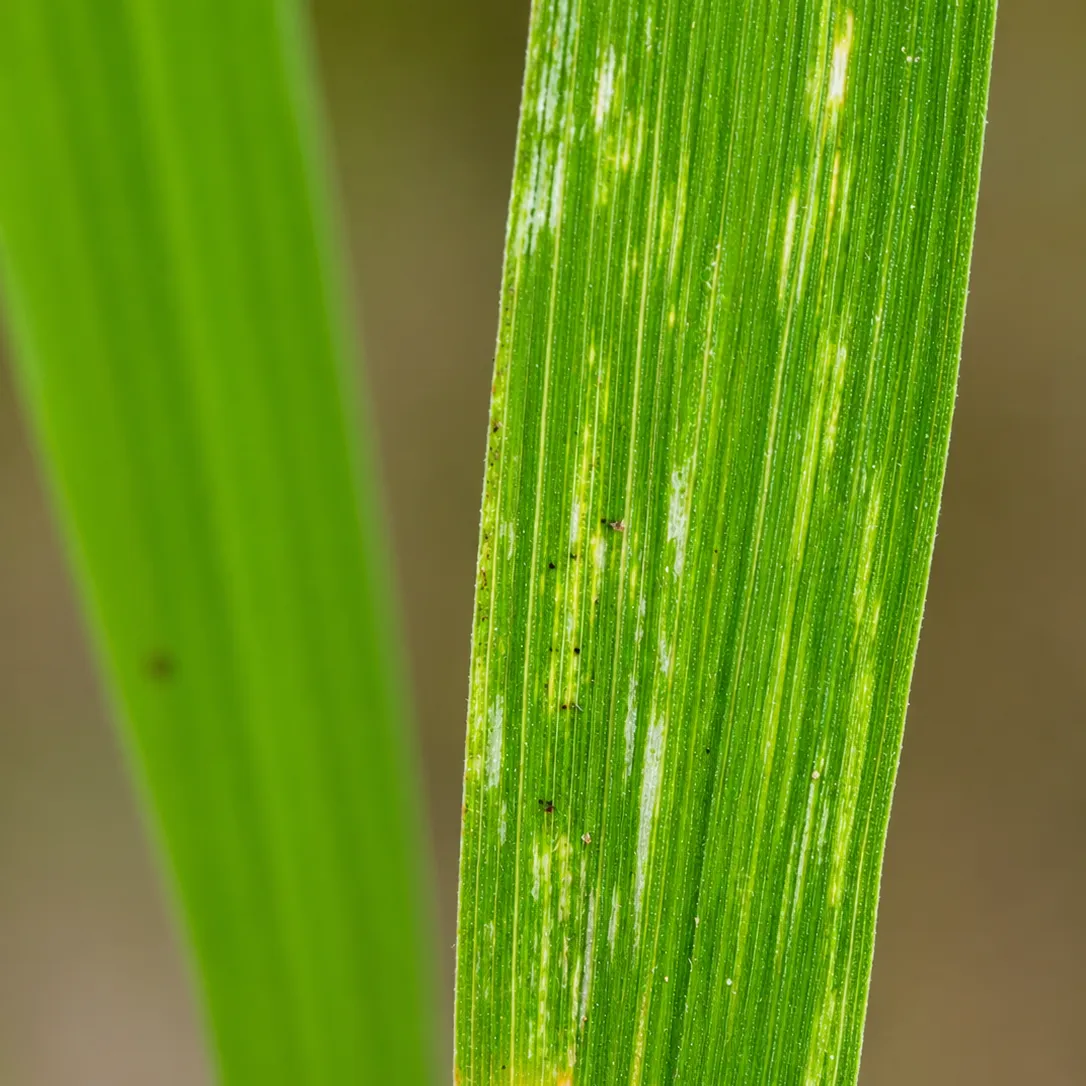
Young leaves develop silvery streaks and yellowish patches due to feeding on soft leaf tissues. Leaves curl inward, with the margins rolling towards the midrib. The damaged areas may become translucent because the epidermis remains after the internal tissues are injured. Leaf tips may wither and dry in severe infestations. Heavily affected seedlings may show poor growth. At the reproductive stage, severe injury may be associated with unfilled grains. Diagnostic distinction: Inspect inside curled leaves for tiny yellow larvae and dark-brown adults. Drought can also cause leaf rolling, but it does not produce the same characteristic thrips feeding injury.

Recommendations (1)
Thiamethoxam 75% (WG)

Whorl maggot

Whorl maggot

Causal organism

Hydrellia sasakii, Hydrellia philippina

Symptoms

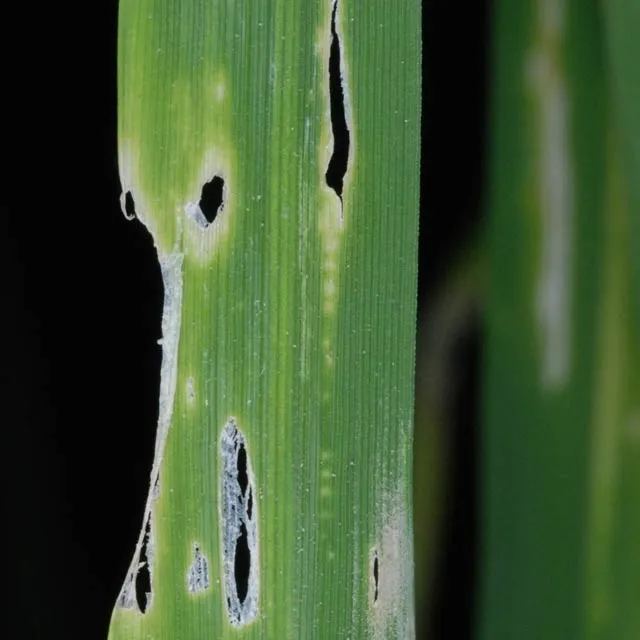
Young larvae rasp the tissues of unopened central leaves and developing leaf blades. As the leaves unfold, white or transparent patches become visible. Small pinholes and elongated damaged areas appear on the leaves. Clear or yellow spots may occur along the inner margins of emerging leaves. Injured leaves may become distorted and can break easily in the wind. Plants may become stunted and produce fewer tillers when damage is severe. Diagnostic distinction: Damage is concentrated on young, emerging leaves. The plant may recover as tillering progresses, so insecticide treatment should not be based on leaf symptoms alone.

Recommendations

No recommendations available

Green leafhoppers

Green leafhoppers

Causal organism

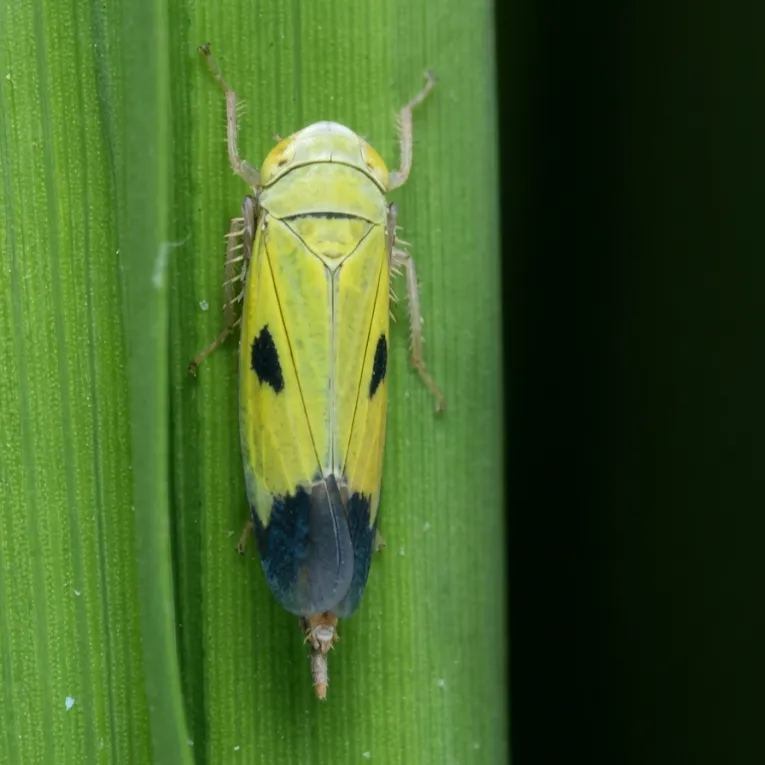
Nephotettix virescens

Symptoms

- Both nymphs and adults suck sap from the leaf blades. - Feeding injury may reduce plant vigour and contribute to stunted growth. - Infected plants may have fewer productive tillers and may eventually wither or dry completely. - The most important damage is the transmission of rice tungro virus and other reported viral diseases. - Tungro-affected plants may show yellowing or yellow-orange discoloration and stunting, depending on the disease and plant stage. Diagnostic distinction: Direct sap-feeding damage alone is not sufficient to diagnose tungro. Look for green leafhoppers and assess the characteristic symptoms of viral infection.

Recommendations

No recommendations available

Rice hispa

Rice hispa

Causal organism

Dicladispa armigera

Symptoms

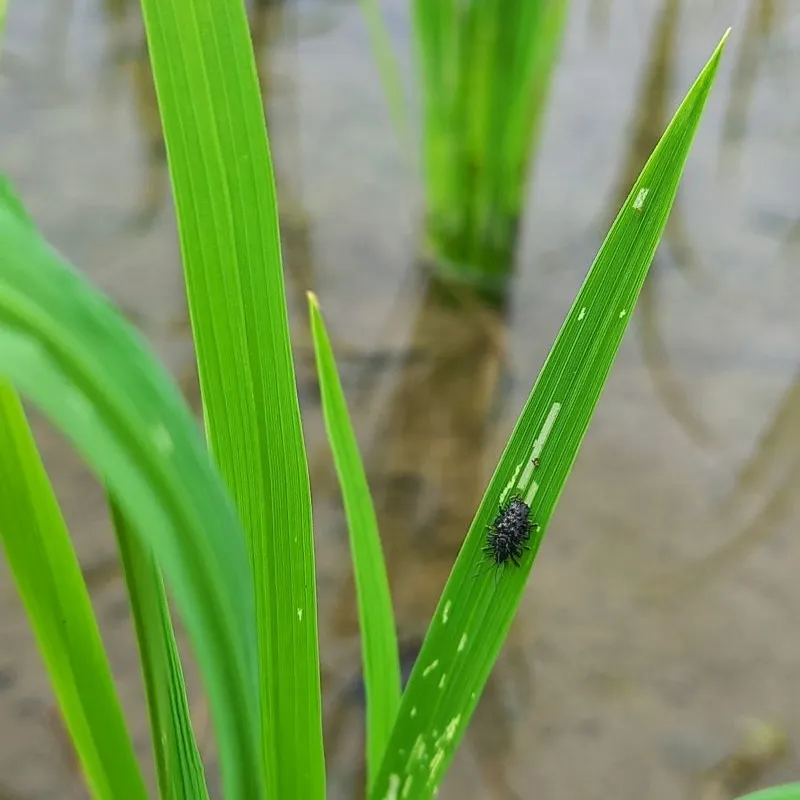
Adult beetles scrape the upper surface of the leaf blade, leaving the lower epidermis intact. The damaged area appears as elongated, whitish streaks running parallel to the midrib and leaf veins. Larvae tunnel through leaf tissues, producing irregular, translucent white patches. Damaged leaves become whitish, thin and membranous. Severely damaged leaves wither, and the crop may appear burnt from a distance. Diagnostic distinction: The characteristic combination is long white surface-scraping streaks and translucent patches caused by larval tunnelling. Confirm by looking for the small, spiny beetles or larvae.

Recommendations

No recommendations available

Rice caseworm

Rice caseworm

Causal organism

Nymphula depunctalis

Symptoms

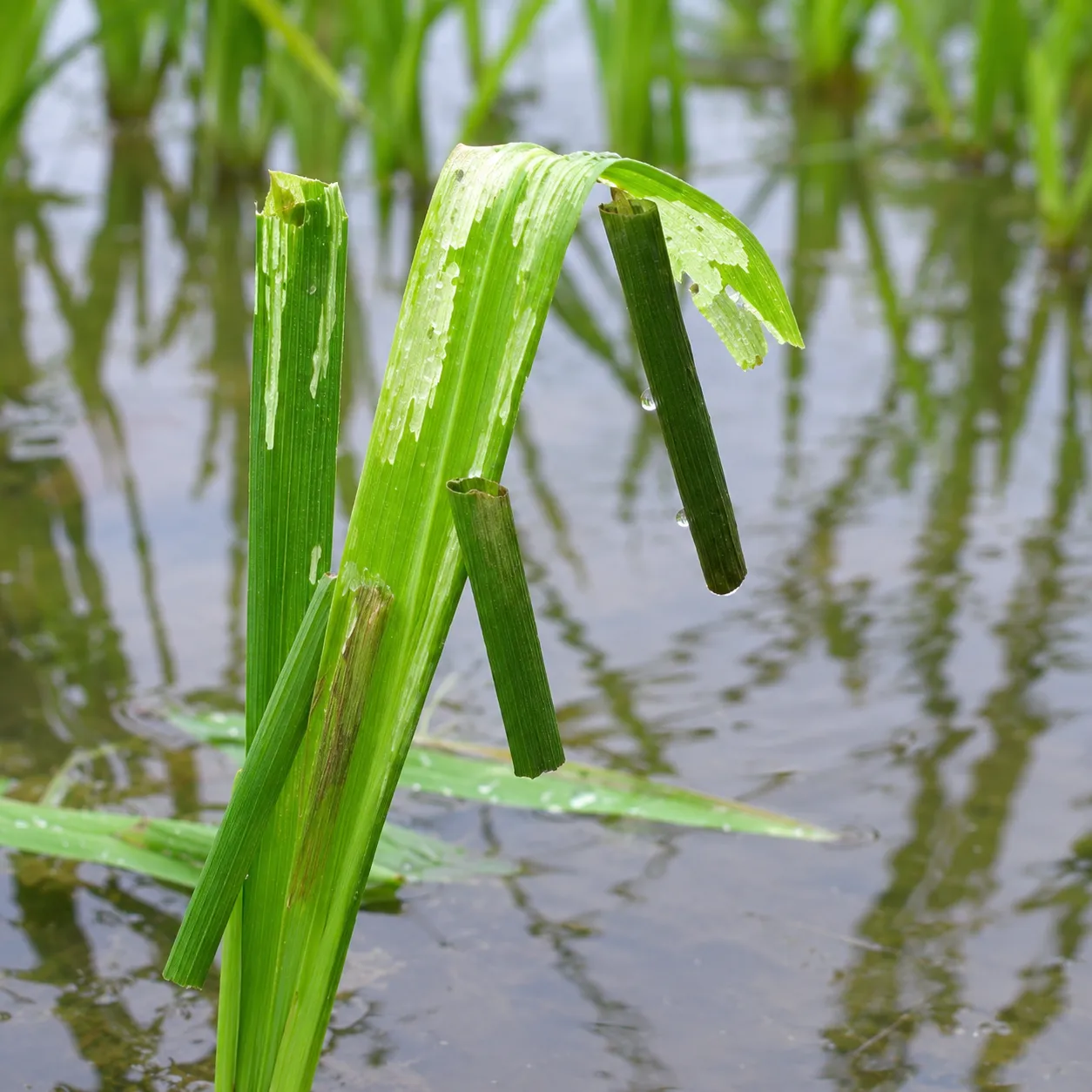
Caterpillars cut leaf tips or sections of the leaf blade at nearly right angles, resembling cuts made with scissors. The caterpillar uses a cut leaf section to form a protective case. The case may be seen floating on the water surface or attached to a leaf sheath. Feeding removes the green tissue, leaving the leaf with a papery appearance. The remaining leaf tissue may show a ladder-like pattern of veins and strips. Severe defoliation can cause stunted growth and may delay crop maturity. Diagnostic distinction: Right-angled leaf cuts, ladder-like skeletonized tissues and leaf cases floating on standing water are the most useful identification features.

Recommendations

No recommendations available

Rice skipper

Rice skipper

Causal organism

Pelopidas mathias

Symptoms

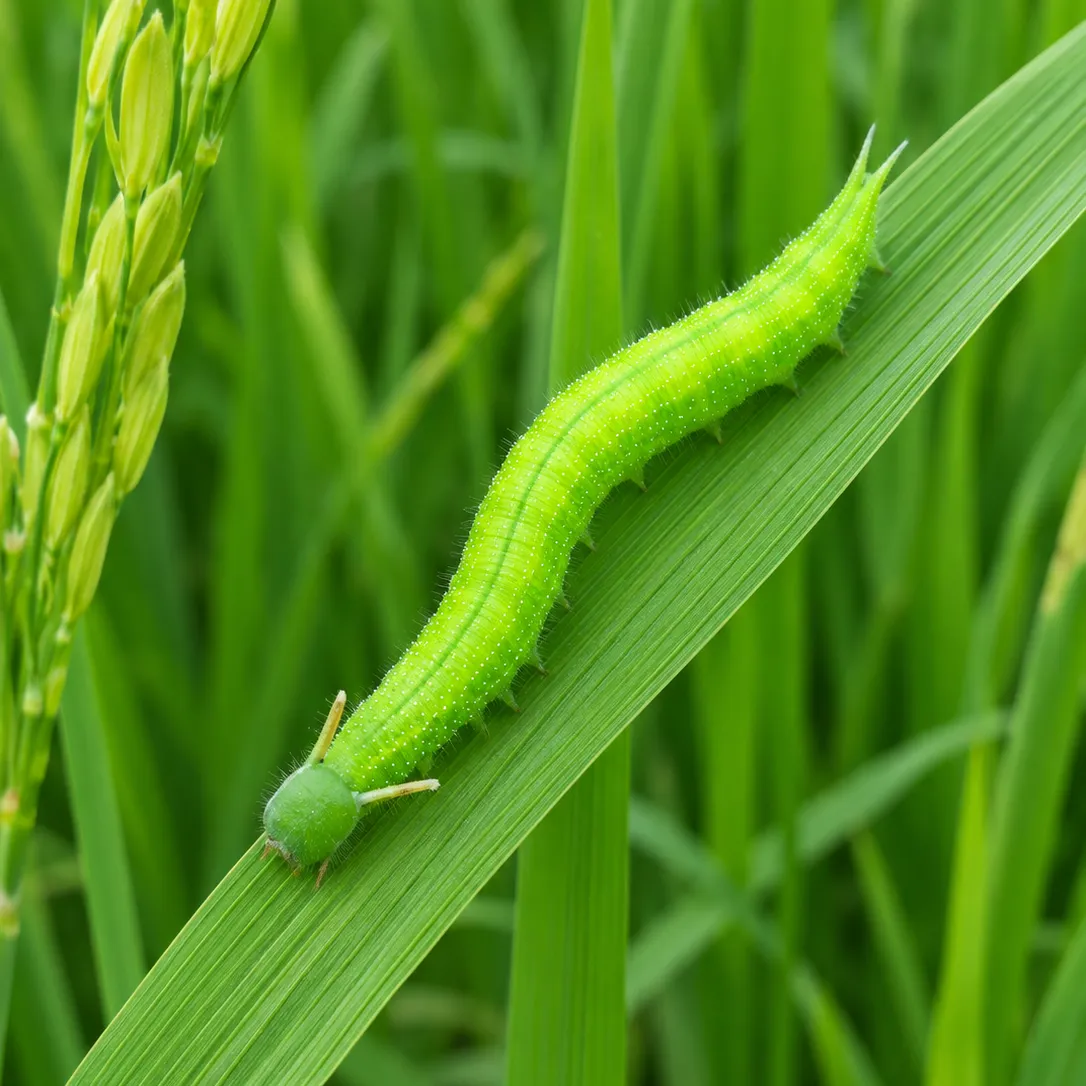
Caterpillars feed on leaf blades and remove portions of the leaf tissue. They may consume the leaf margins and progressively remove much of the blade, sometimes leaving only the midrib. Leaf tips roll down, or the two edges of a leaf fold together. Two adjacent leaves may be tied together with silken threads to form a protective chamber. Caterpillars remain concealed inside these folded leaves during the day. Diagnostic distinction: Look for folded or rolled leaves secured with silk and a caterpillar sheltering inside. Rice skippers are generally minor pests when natural enemies keep their populations low.The symptoms may resemble rice leaf folder damage.

Recommendations

No recommendations available

Rice earhead bug

Rice earhead bug

Causal organism

Leptocorisa acuta

Symptoms

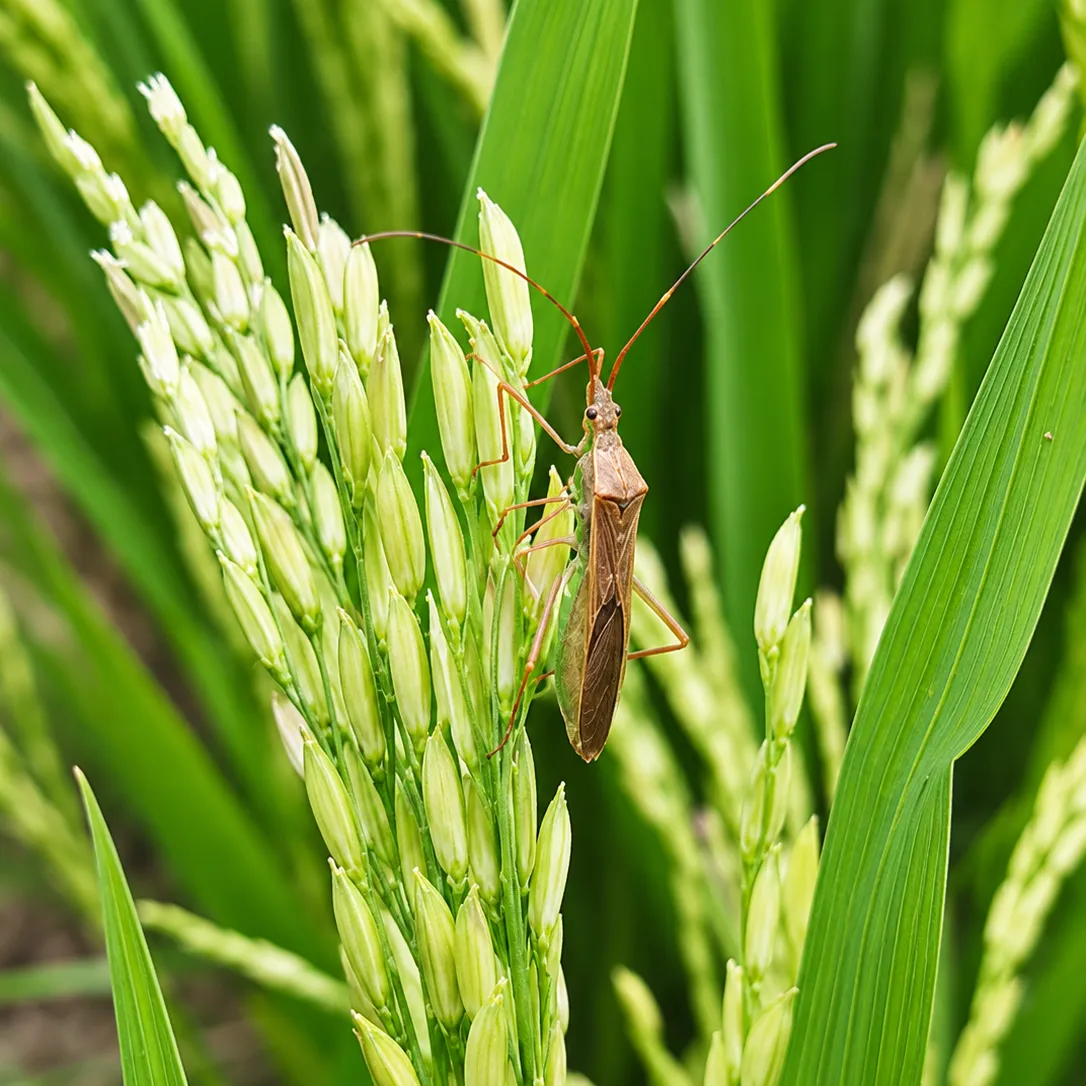
Nymphs and adults suck the contents of developing rice grains, from pre-flowering spikelets through the soft dough stage. Grains become poorly filled, shrivelled or empty. Damaged grains may be deformed, discoloured or develop spots. Panicles may remain erect because the grains fail to develop normally. An unpleasant odour may be noticed when the bugs are disturbed or crushed. Diagnostic distinction: Unlike leaf-feeding insects, rice bugs primarily damage the developing grains. Look for slender, brown-green bugs on panicles, especially during flowering and grain filling.

Recommendations

No recommendations available