Cassava mosaic virus

Cassava mosaic virus
Causal organism

cassava mosaic virus

Symptoms

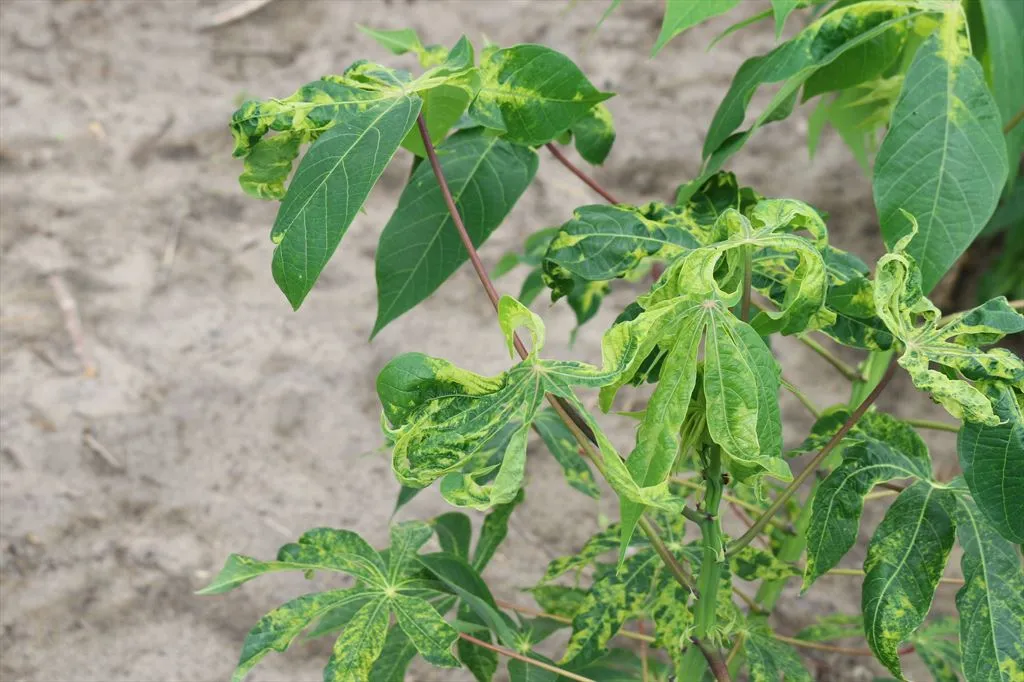
Irregular light and dark green/yellow mosaic patches on leaves. Young leaves are more severely affected. Leaves become small, distorted, curled and wrinkled. Plants become stunted and root yield is reduced.

Recommendations

No recommendations available
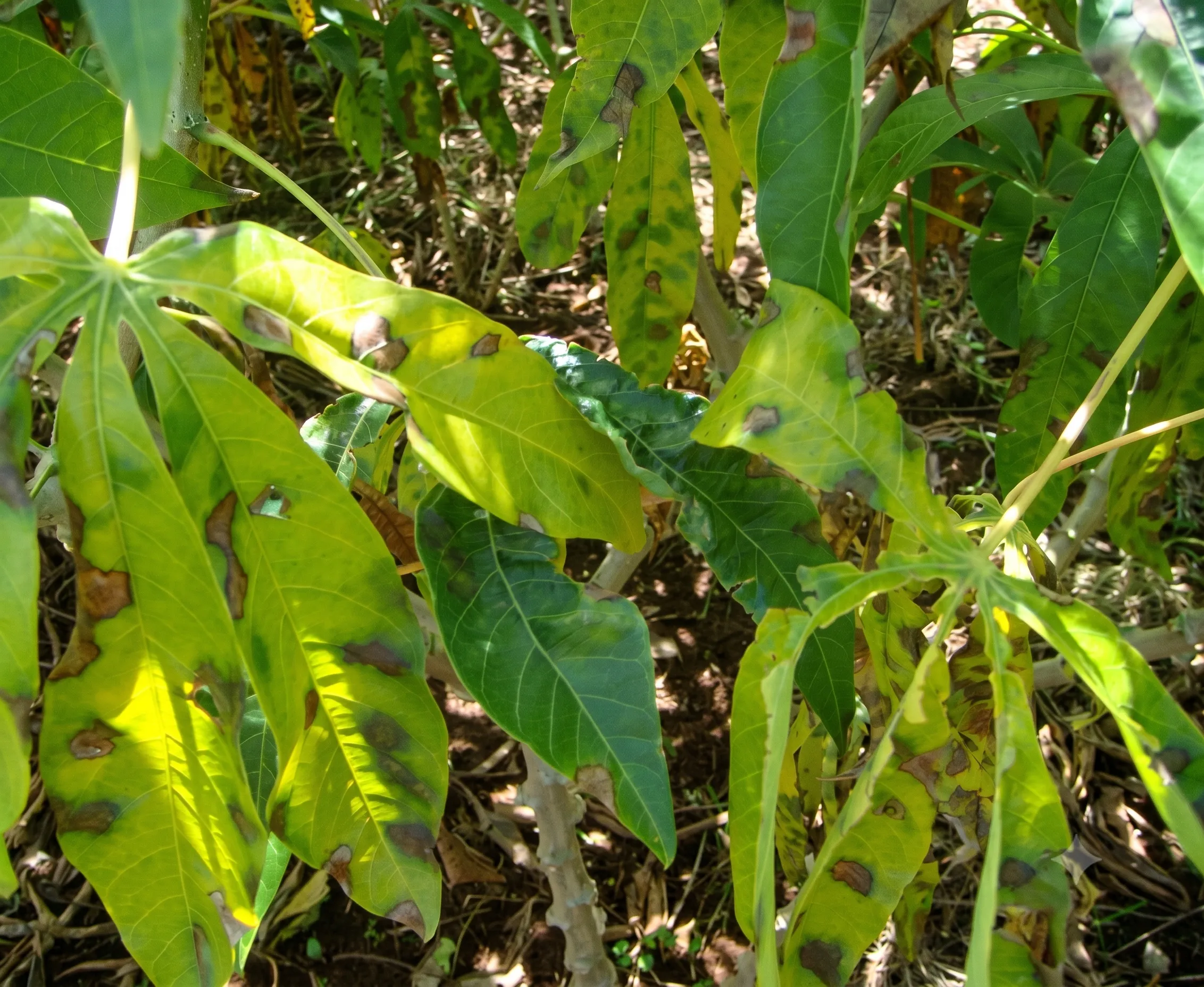
Anthracnose

Anthracnose

Causal organism

Colletotrichum gloeosporioides

Symptoms

Dark, sunken lesions on leaves, stems, flowers, and fruits. The affected leaves wilt and droop downwards. Wilted leaves later fall from the plant. Cankers can be seen on stems and leaf petioles. Death of shoots or die back occurs.

Recommendations (4)
Carbendazim 12% + Mancozeb 63% (WP)
Azoxystrobin + Mancozeb (WP)
Tebuconazole 25% (WG)
Azoxystrobin 18.2% + Difenoconazole 11.4% w/w (SC)

Bacterial leaf blight

Bacterial leaf blight

Causal organism

Xanthomonas axonopodis

Symptoms

The primary symptoms are small, angular, brown, water-soaked lesions between leaf veins on lower surfaces of leaves Later the leaf blades turn brown as the lesion expand. Lesions coalesce to form large necrotic patches. Defoliation occurs with leaf petioles remaining in horizontal position as leaves drop. Dieback of shoots, and brown gum formation on stems, leaves and petioles are also seen.

Recommendations (1)
Kasugamycin 3% (SL)

Spray together with copper oxy chloride for better results

Leaf spot

Leaf spot

Causal organism

Cercospora henningsii, Cercospora vicosae

Symptoms

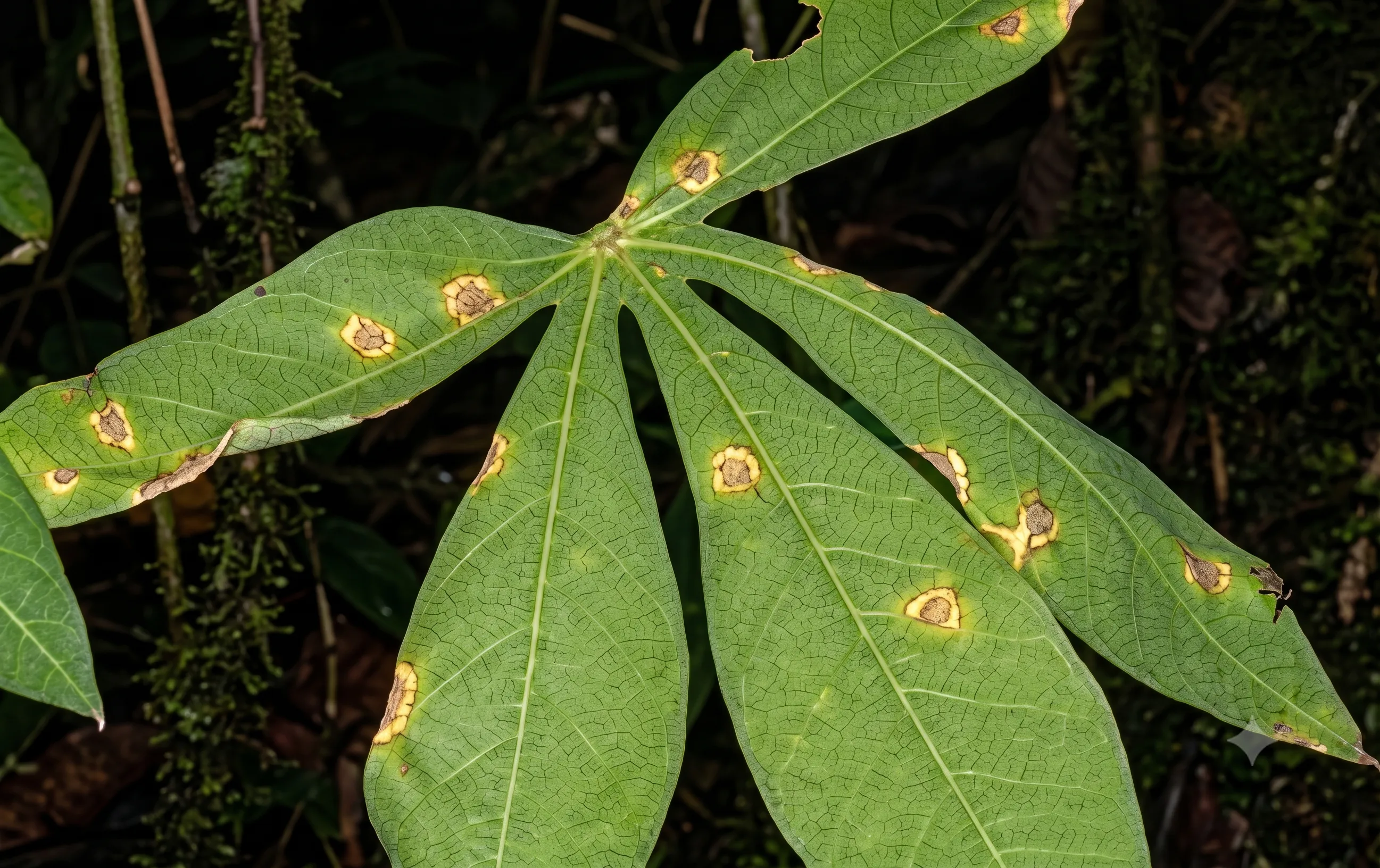
The symptoms of the disease appear on the leaves as small brown coloured necrotic spots surrounded by yellow halo The size, shape, colour and form of the leaf spot vary in accordance with the causal organisms. Spots are produced on both the sides of leaves. On upper surface brown spots with dark border appears. On lower side of the leaf spots with grey centre and less distinct margin appear. Sometimes white spots may be seen on upper surface. The infected leaves turn yellow and dry up.

Recommendations (3)
Tebuconazole 38.39% w/w (SC)
Azoxystrobin 8.3% + Mancozeb 66.7% (WG)
Metiram 70% (WG)

Tuber rot

 Tuber rot

Causal organism

Macrophomina phaseolina, Botryodiplodia theobromae, Fusarium spp.

Symptoms

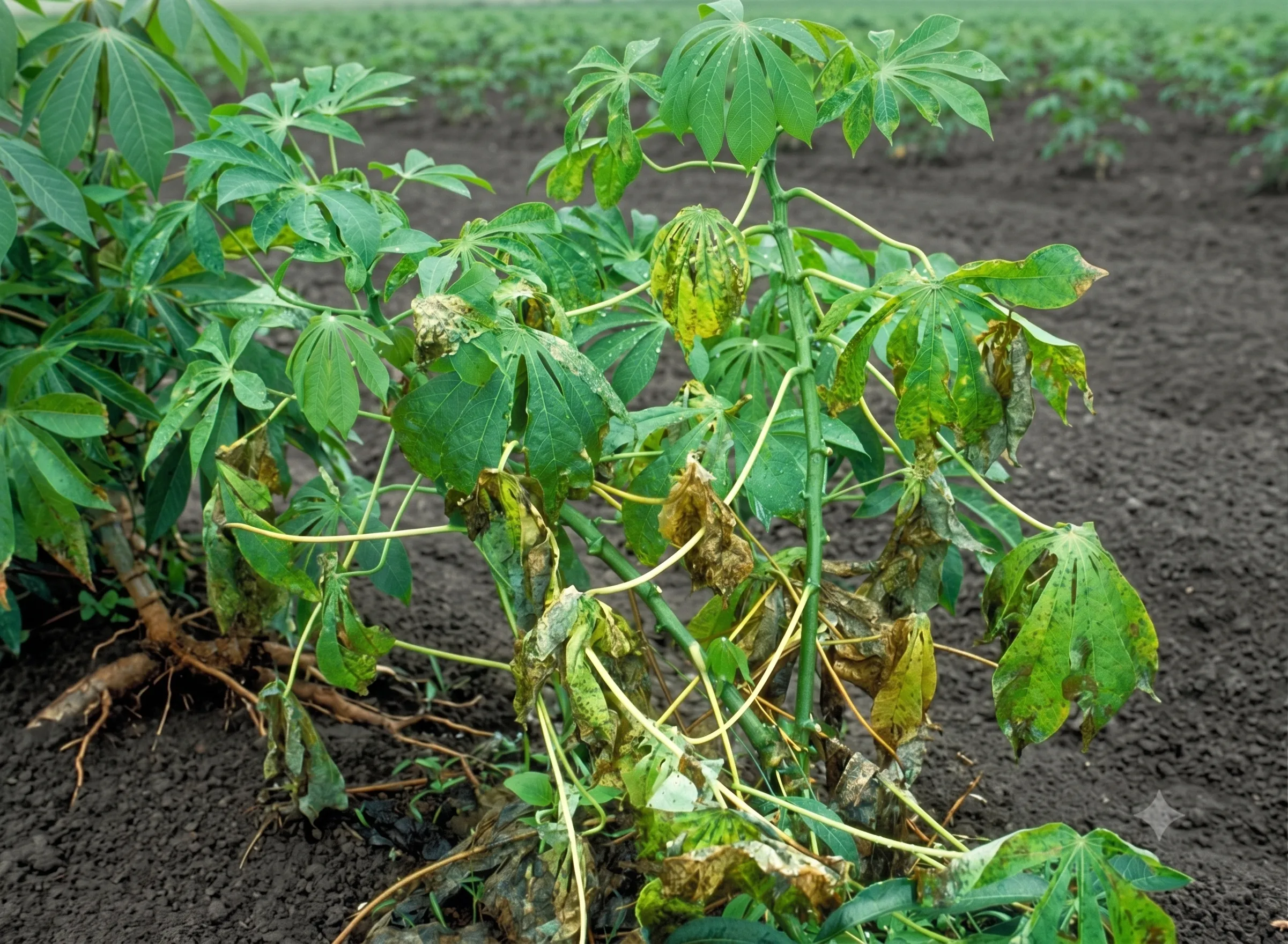
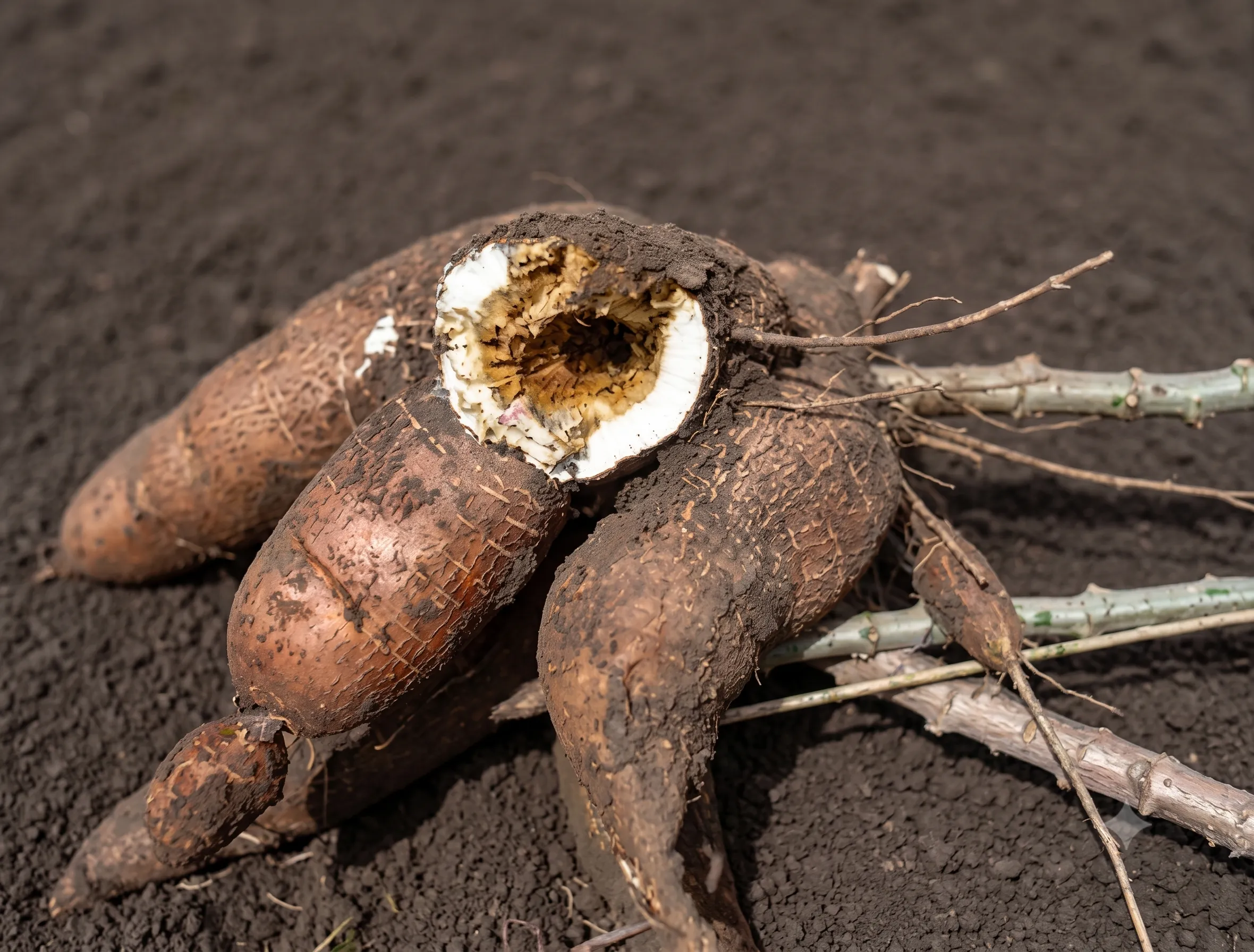
The initial symptoms are leaves turning brown and wilting. The leaves may remain attached to the plant or drop to the ground. The infected plant will show a scorched appearance. The examination of roots reveals root dieback and swelling of tubers. Tubers may have light brown, dark gray, blue or pink discoloration. The rotting roots may be soft and produce a foul odor. In some cases, white fungal structures can be seen at the base of the stem, particularly during the wet season.

Recommendations (2)
Carbendazim 50% (WP)

Use for sett treatment as preventive measure. Bio Control: Mix 2.5kg Trichoderma viride / T. harzianum with 100–250 kg of well-decomposed Farmyard Manure (FYM) and 50 kg neem cake. Incubate for 7–10 days under shade and apply to the soil as prophylactic measure. Keep a minimum of 10 days gap between any other chemical application.

Metalaxyl 8% + Mancozeb 64% (WP)

To control spread of the infection, drench the soil around the root zone of the infected plant and surrounding plants.