Turcicum Leaf Blight

Turcicum Leaf Blight
Causal organism

Exserohilum turcicum

Symptoms

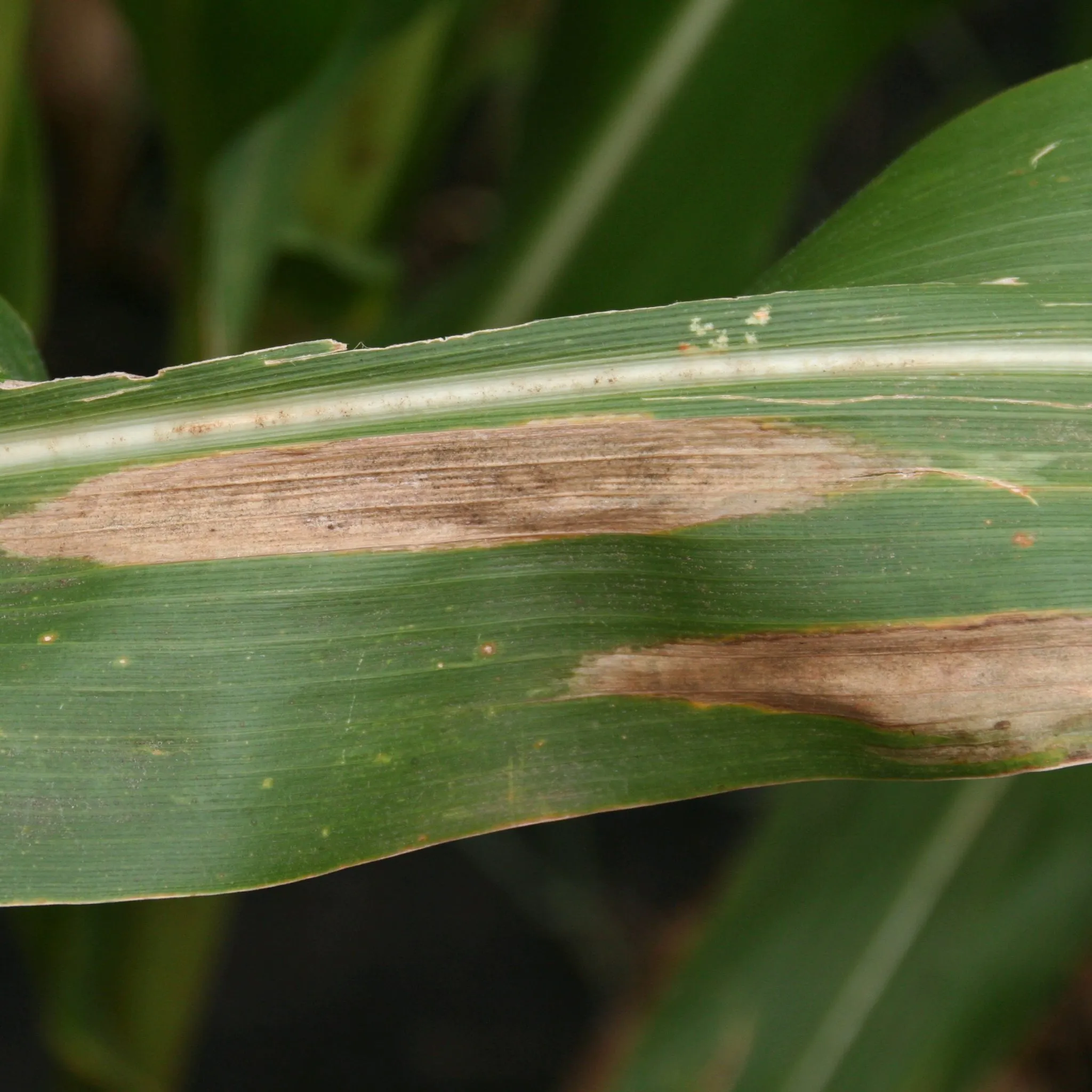
Early symptoms appear as small, oval, water-soaked spots on the leaves. Spots enlarge into long, spindle-shaped or cigar-shaped lesions. Mature lesions are greyish-green to tan and have necrotic centres. Lesions often appear first on lower leaves and increase in number and size as the plant grows. Adjacent lesions may merge, causing large areas of leaf tissue to dry and appear burned. Severe infection around silking can result in extensive loss of green leaf area.

Recommendations (3)
Azoxystrobin 18.2% + Difenoconazole 11.4% w/w (SC)
Azoxystrobin 18.2% w/w + Cyproconazole 7.3% w/w (SC)
Kresoxim-methyl 44.3% (SC)
Maydis Leaf Blight

Maydis Leaf Blight

Causal organism

Bipolaris maydis

Symptoms

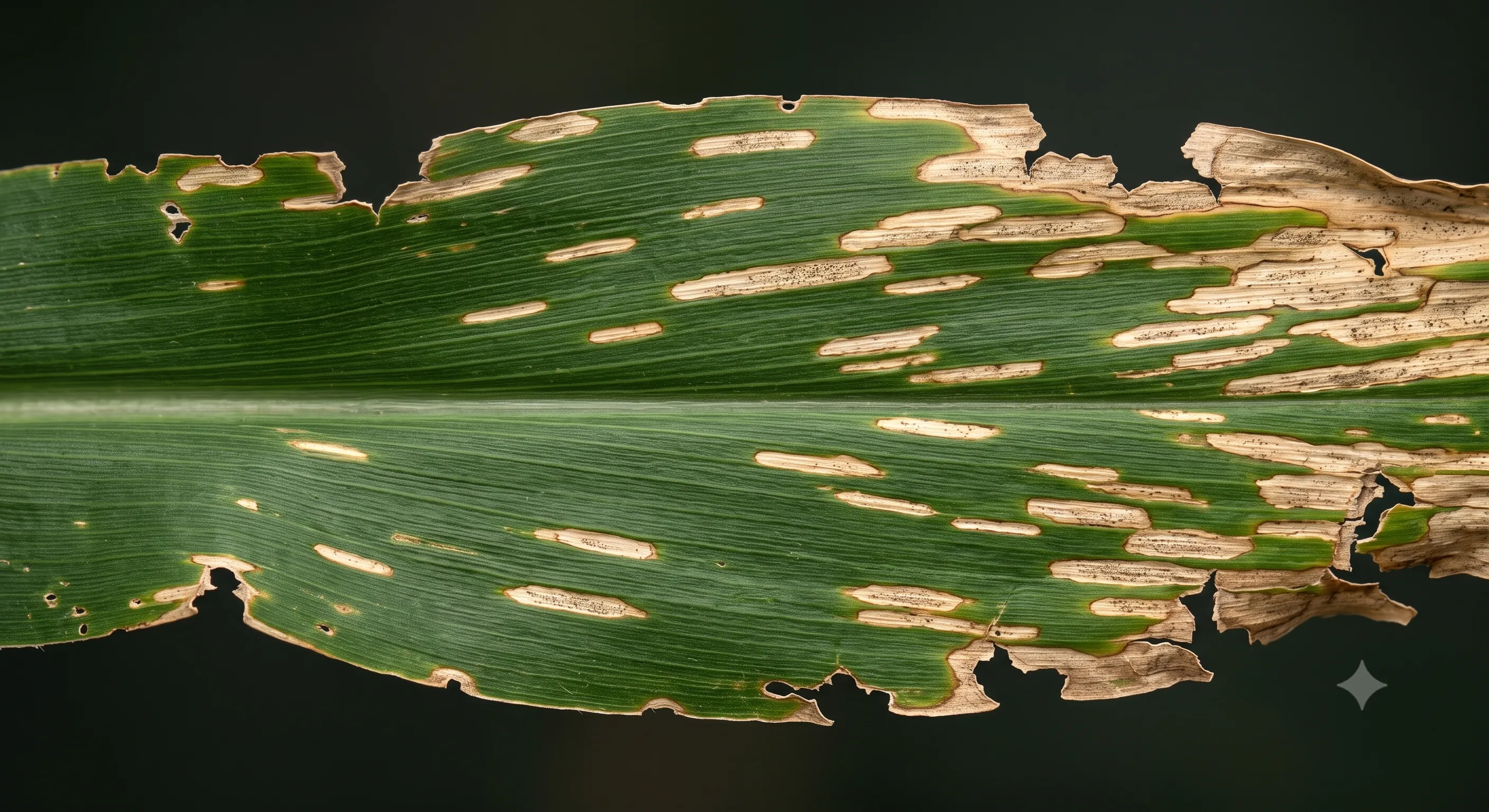
Initial lesions are small and diamond-shaped. Lesions become elongated as the disease progresses. In the common O strain, lesions are generally tan or brown, elongated and restricted by the leaf veins, giving them a rectangular appearance. Lesions may merge and cause extensive drying or burning of leaf tissue. The historical T strain can produce larger, oval lesions and may also affect leaf sheaths and husks.

Recommendations (1)
Propiconazole 25% (EC)

Banded Leaf and Sheath Blight

Banded Leaf and Sheath Blight

Causal organism

Rhizoctonia solani f.sp. sasakii

Symptoms

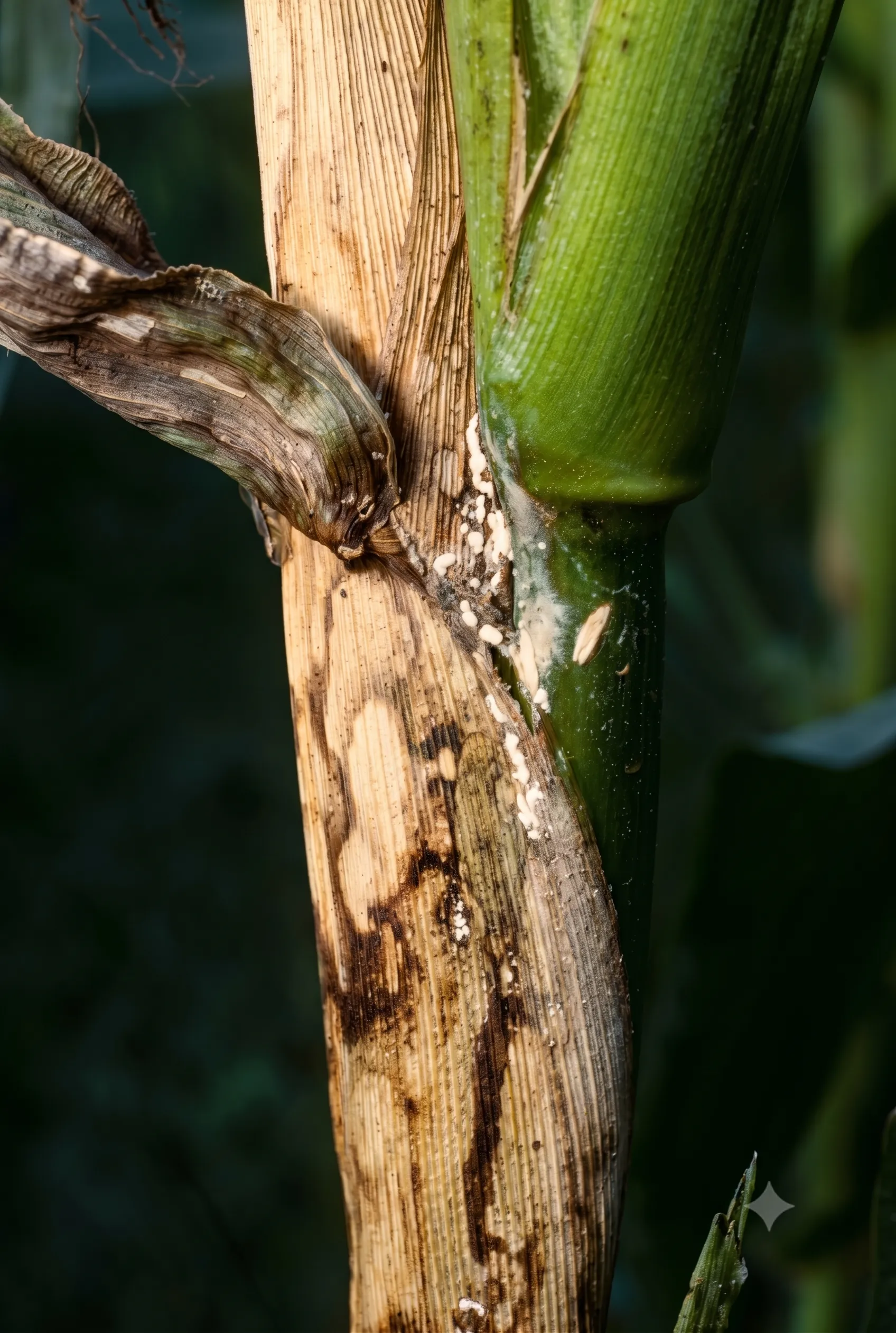
Concentric, banded spots develop on leaves and leaf sheaths. Lesions enlarge and may cover large areas of the leaf or husk. Affected ears develop brownish rot. Light-brown, cottony fungal growth may occur on the ear. Small, round, black sclerotia may be visible in the fungal growth.

Recommendations (3)
Propiconazole 25% (EC)
Hexaconazole 5.0% + Validamycin 2.50% (SC)
Tebuconazole 50% + Trifloxystrobin 25% (WG)

Polysora rust

Polysora rust

Causal organism

Puccinia polysora

Symptoms

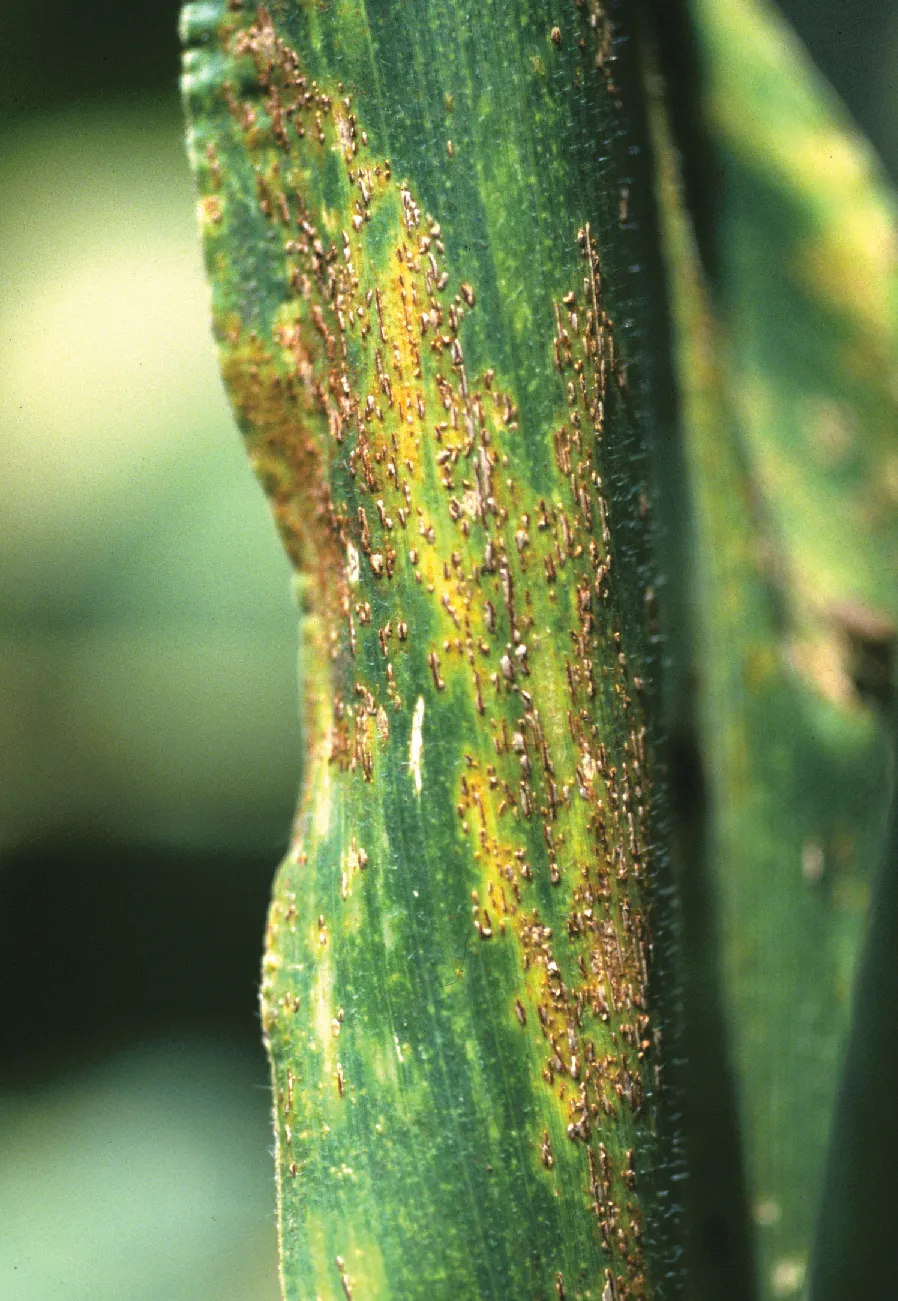
Small, nearly circular pustules develop on both surfaces of the leaves. Pustules are generally lighter orange than those of common rust. The epidermis remains intact for longer during early infection. Pustules turn dark brown as the crop approaches maturity. Severe infections produce numerous pustules and extensive leaf damage.

Recommendations (2)
Kresoxim-methyl 44.3% (SC)
Azoxystrobin 18.2% w/w + Cyproconazole 7.3% w/w (SC)

Downy mildew

Downy mildew

Causal organism

Peronosclerospora sorghi

Symptoms

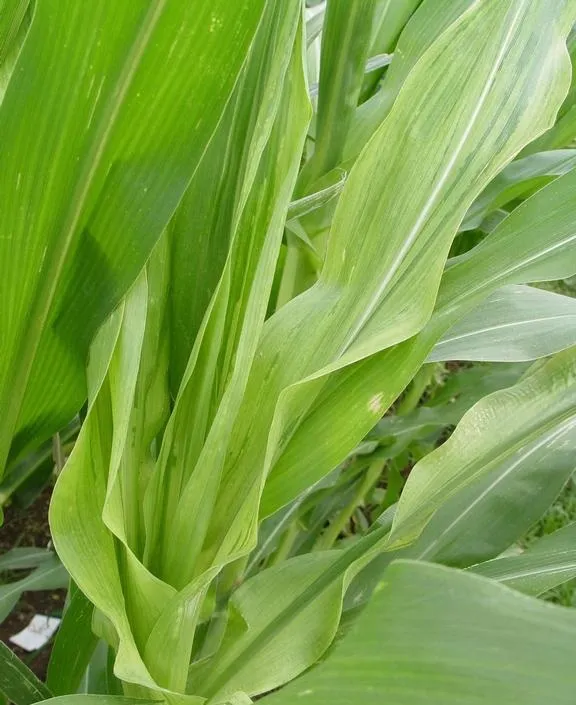
Yellow or pale-green chlorotic stripes develop along the leaves, sometimes involving only part of a leaf. White, downy fungal growth may appear on the upper or lower leaf surface, especially under humid conditions and in the early morning. Plants may become stunted, with shortened internodes. Leaves may become narrow, thick, leathery and abnormally erect. Systemically infected plants may produce malformed tassels, fail to produce normal ears or form small, poorly filled ears. In crazy top, normal floral structures may develop into leaf-like structures, with excessive tillering or abnormal ear shoots. In brown stripe downy mildew, narrow yellow stripes bounded by veins may later turn reddish or purple and merge into larger blotches.

Description

Types and causal organism: Peronosclerospora sorghi — sorghum downy mildew. Peronosclerospora philippinensis — Philippine downy mildew. Peronosclerospora maydis — Java downy mildew. Peronosclerospora sacchari — sugarcane downy mildew. Sclerophthora macrospora — crazy top downy mildew. Sclerophthora rayssiae var. zeae — brown stripe downy mildew.

Recommendations (3)
Metalaxyl 35% (WS)

Use for seed treatment

Azoxystrobin 18.2% + Difenoconazole 11.4% w/w (SC)
Azoxystrobin 18.2% w/w + Cyproconazole 7.3% w/w (SC)

Charcoal rot

Charcoal rot

Causal organism

Macrophomina phaseolina

Symptoms

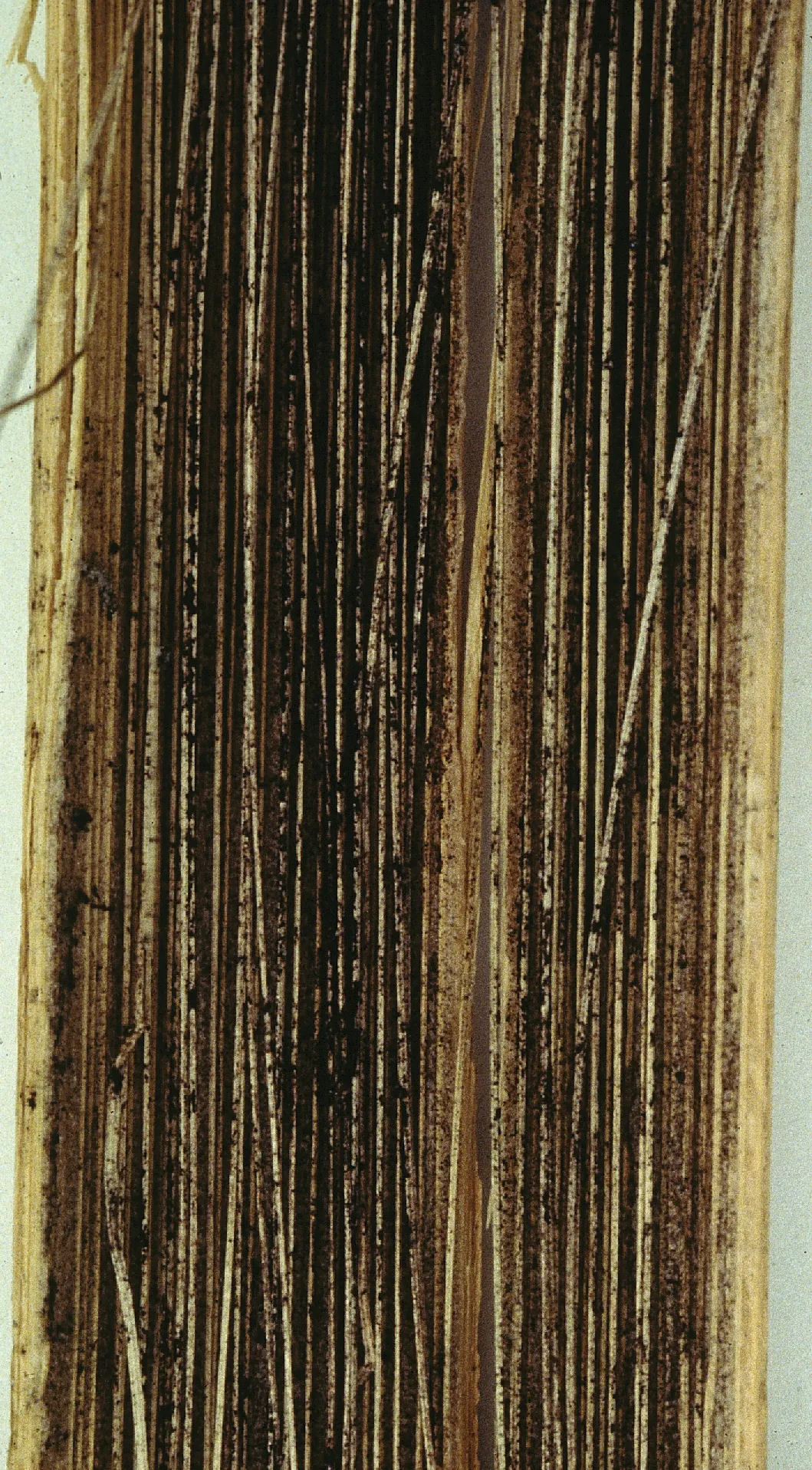
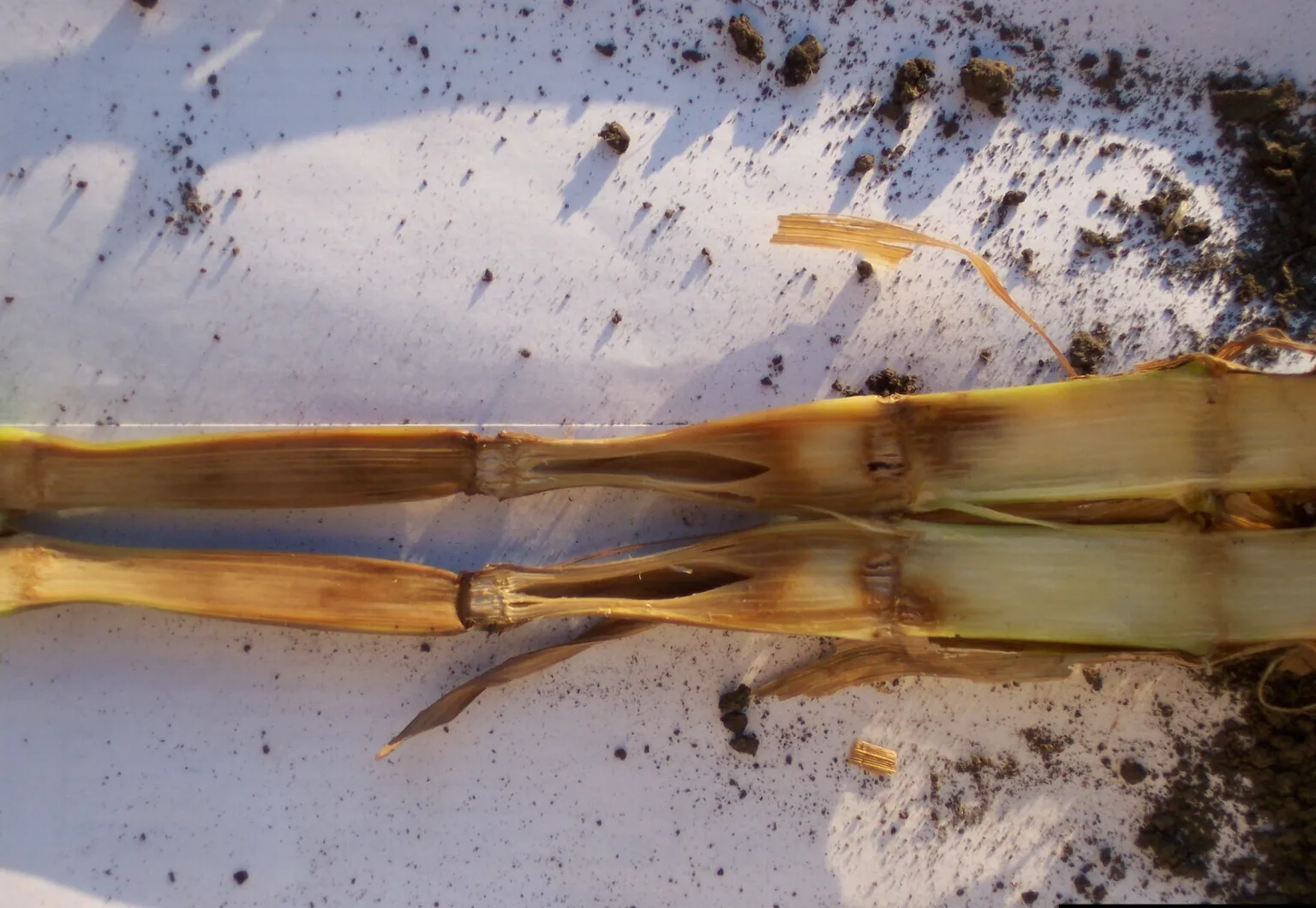
Upper leaves begin drying abnormally, often after flowering. Lower stalk internodes develop dark discoloration internally. The pith becomes shredded and the vascular bundles turn dark. Numerous tiny black sclerotia may be visible on the internal tissues. Stalks become weak and may break near the base or crown. Infected kernels may also become blackened.

Recommendations (3)
Carboxin 37.5% + Thiram 37.5% (WS)

As seed treatment

Carbendazim 12% + Mancozeb 63% (WP)

As soil drenching near root zone of the affected plants and the plants surrounding the affected ones.

Tebuconazole 50% + Trifloxystrobin 25% (WG)

As soil drenching near root zone of the affected plants and the plants surrounding the affected ones.

Fusarium stalk rot

Fusarium stalk rot

Causal organism

Fusarium verticillioides

Symptoms

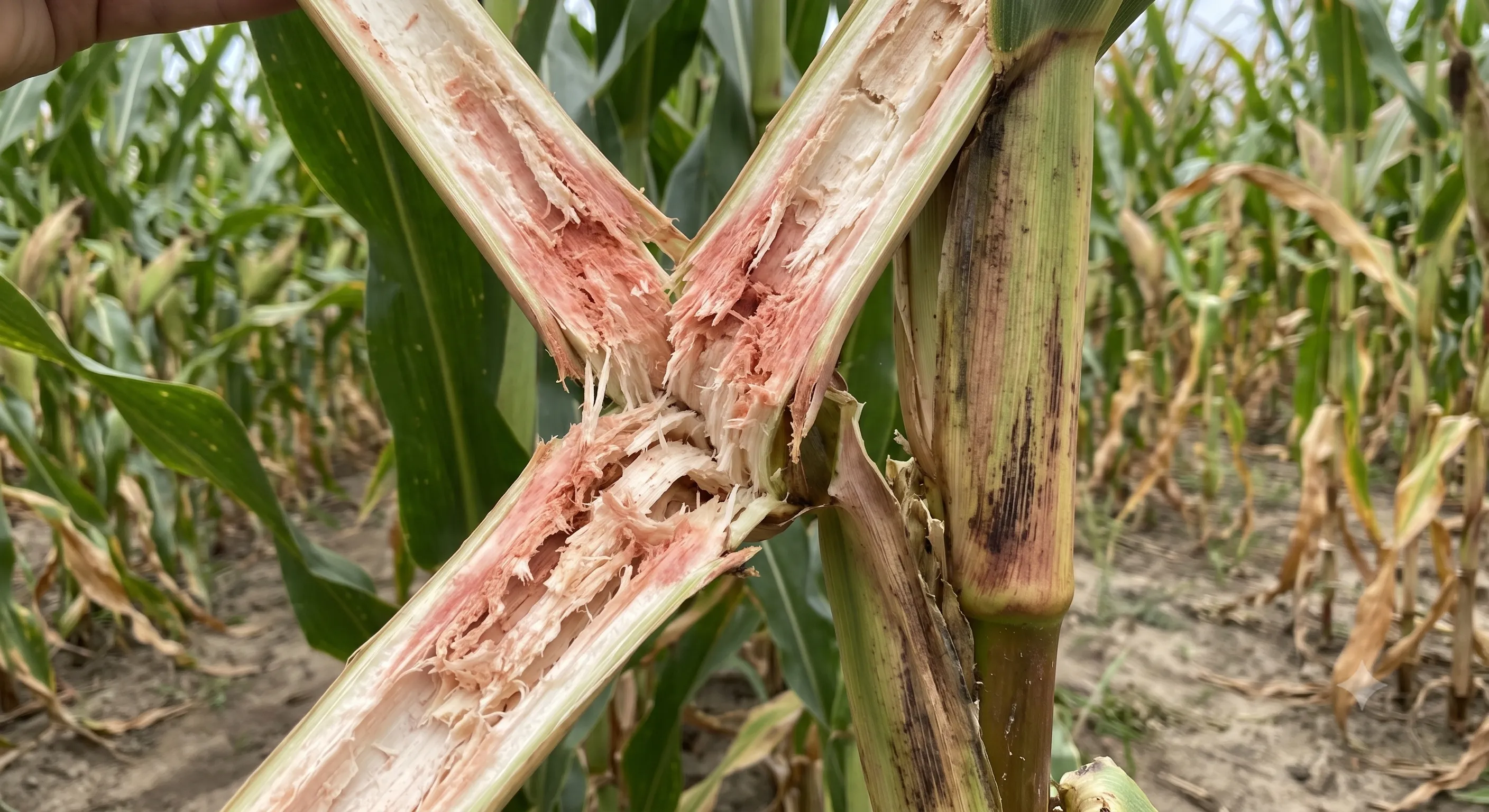
Plants wilt prematurely, although the dry stalk may remain standing. Small, dark-brown lesions develop on the lower internodes. When the stalk is split open, the phloem and internal tissues show conspicuous brown discoloration. The pith becomes shredded in advanced stages. Infected plants may lodge, particularly when the stalk becomes weak.

Recommendations (1)
Carboxin 37.5% + Thiram 37.5% (WS)

seed treatment with the recommended dose is the best solution. Applying recommended potassium and reducing moisture stress during flowering time may reduce the severity of incidence. If disease incidence is noticed, follow proper crop rotation to avoid multiplication of the pathogen.

Pythium stalk rot

Pythium stalk rot

Causal organism

Pythium aphanidermatum

Symptoms

Basal internodes become soft, water-soaked and dark. Infected stalks may twist before the plants lodge. The stalk loses its structural strength and may collapse. Plants can remain alive until the vascular bundles become extensively damaged. The disease may occur before flowering.

Recommendations (1)
Metalaxyl 8% + Mancozeb 64% (WP)

Remove fallen stalks and drench the base of surrounding healthy plants (lower 1–2 internodes and root zone)

Fusarium Ear Rot

Fusarium Ear Rot

Causal organism

Fusarium verticillioides

Symptoms

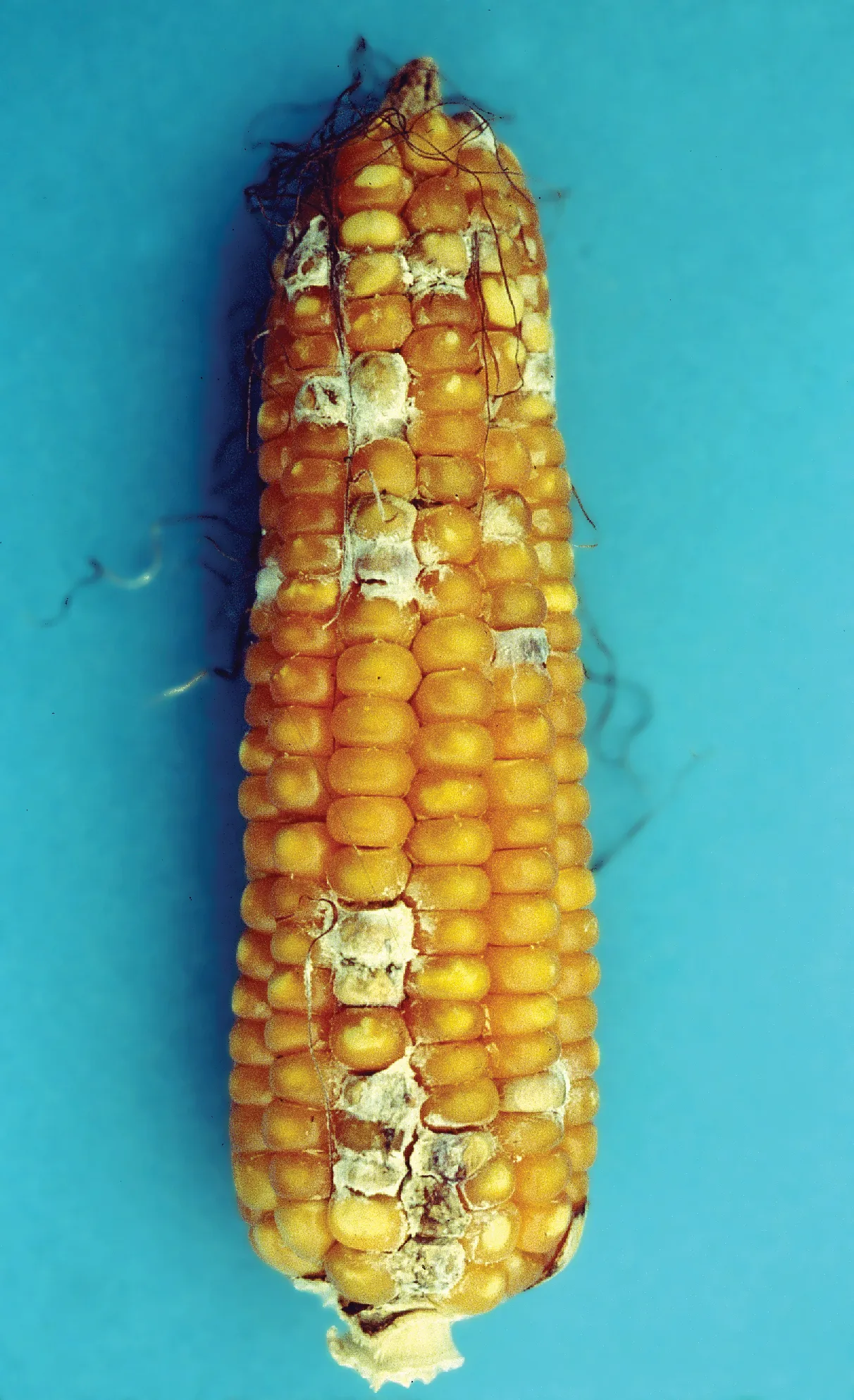
Individual kernels or small groups of kernels develop white fungal growth. Infected kernels may show white streaks on the outer covering (pericarp). Some kernels may germinate while still attached to the cob. Insect-damaged kernels are often affected.

Recommendations

No recommendations available

Aspergillus Ear Rot

Aspergillus Ear Rot

Causal organism

Aspergillus flavus

Symptoms

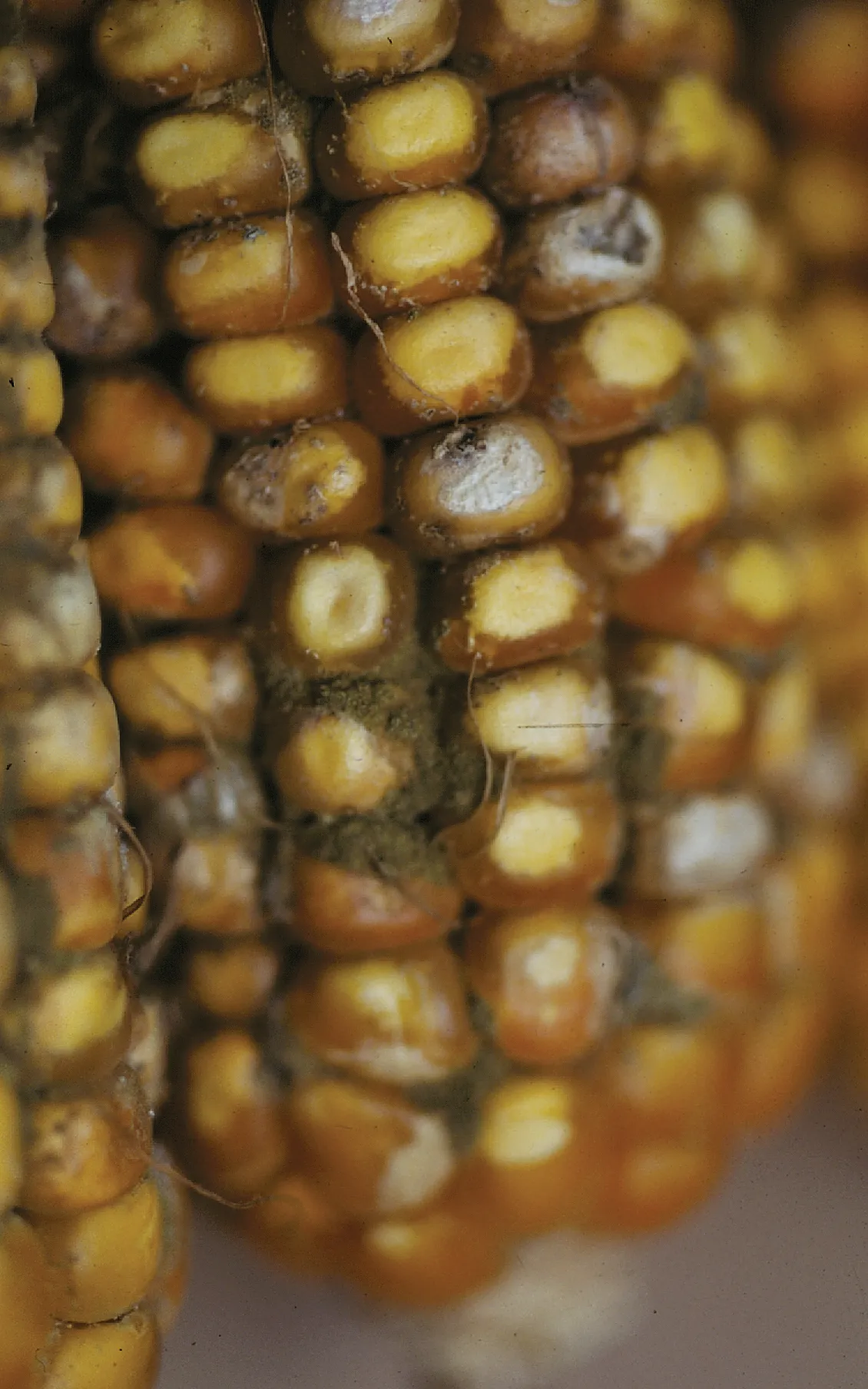
Powdery fungal growth develops on kernels and the cob. A. flavus and related species may produce yellow-green spore masses. A. niger produces black, powdery spore masses. Affected kernels may become discoloured and deteriorate, especially under high-moisture conditions. A. flavus and A. parasiticus can produce aflatoxins, which are harmful to humans and animals.

Recommendations

No recommendations available

Showing 10 of 14